
A water heater that stops working does not always announce itself with a dramatic failure. More often, it sends warning signals for weeks or months before a problem becomes impossible to ignore. Knowing those signals and acting on them quickly is the difference between a straightforward repair visit and waking up to a flooded mechanical room or no hot water on a cold Michigan morning. Water heater repair handled at the early warning stage is almost always less expensive and less disruptive than emergency service after a complete failure. The same informed approach that goes into managing the rest of a home’s plumbing and mechanical systems applies directly to your water heater.
In this guide, you will learn:
- The 7 warning signs that tell you professional water heater repair is needed
- What to expect during a professional water heater repair visit
- How to decide between repairing and replacing a failing unit
- What basic maintenance can extend the life of a functioning water heater
- When a water heater problem becomes an emergency that cannot wait
Understanding What Your Water Heater Is Trying to Tell You

Most homeowners interact with their water heater only indirectly, noticing it primarily when it fails to deliver hot water when expected. But a water heater communicates its condition continuously through performance, sound, and visual cues that provide meaningful advance warning of developing problems. Recognizing these signals before they escalate into complete failures is the foundation of a proactive approach to water heater maintenance that saves money and avoids disruption.
For homeowners in Birmingham, MI and surrounding areas where water heaters work hard year-round to maintain setpoint temperatures against Michigan’s cold incoming water, catching a developing problem early can add years to equipment that might otherwise be replaced prematurely.
- Cost Avoidance: Minor water heater issues that are addressed when first detected typically cost far less to repair than the same problems left to develop into component failures, tank corrosion, or water damage from a failed unit.
- Hot Water Reliability: A water heater that is exhibiting warning signs is already underperforming. Addressing the underlying problem restores the reliable hot water supply the household depends on rather than managing symptoms while the unit deteriorates further.
- Water Damage Prevention: Tank-style water heaters hold 40 to 80 gallons of water that is under constant pressure. A unit showing signs of tank corrosion or fitting failure is a significant water damage risk, and early intervention prevents the kind of flooding event that can affect flooring, walls, and stored belongings.
- Energy Efficiency: Many water heater problems cause the unit to work harder than it should to maintain setpoint, which increases energy consumption. A repair that addresses the underlying issue restores operating efficiency and reduces utility costs.
- Equipment Lifespan: A water heater that receives prompt attention when problems arise, rather than operating through developing failures, consistently reaches or exceeds its expected service life.
7 Signs Your Water Heater Needs Professional Repair
These seven warning signs range from subtle early indicators to urgent situations that require same-day service. None of them should be dismissed or monitored indefinitely without professional evaluation, because water heater problems consistently worsen rather than resolve on their own.
1. Inconsistent or Insufficient Hot Water
A water heater that once produced reliable hot water for a full shower and a load of laundry but now runs cold after a brief shower is telling you that its heating capacity has changed. In a gas water heater, this most commonly indicates a failing thermocouple, a dirty or improperly adjusted burner, or sediment accumulation on the bottom of the tank that insulates the water from the burner flame. In an electric unit, it typically points to a failed heating element.
The important distinction is between a gradual decline in hot water capacity, which suggests a developing component failure, and a sudden complete loss of hot water, which may indicate a pilot light outage, a tripped circuit breaker, or a thermostat failure.
- Note whether the problem is gradual or sudden, as this distinction helps a technician narrow the diagnosis before arriving
- If the water heater still produces some hot water but not as much as it used to, sediment accumulation is among the most likely causes
- A water heater that produces hot water for one use and then requires a very long recovery time before producing more has almost certainly lost one heating element in an electric unit or has a significantly reduced burner output in a gas unit
2. Discolored or Rust-Colored Hot Water
Rust-colored or brown water coming from hot water fixtures is a serious warning sign that the interior of the water heater tank is corroding. Water heater tanks are protected from corrosion by a sacrificial anode rod, a magnesium or aluminum rod that corrodes preferentially to protect the steel tank lining. When the anode rod is depleted, the tank itself begins to corrode, and the byproducts of that corrosion enter the water supply.
Discolored hot water can also originate from corroding supply pipes rather than the water heater itself. The distinction is made by running cold water at the same fixtures and noting whether it also appears discolored. If cold water is clear and hot water is rust-colored, the water heater is the source.
- A water heater with a depleted anode rod can often be saved by replacing the anode before tank corrosion becomes significant, which is why annual anode rod inspection is recommended
- Rust-colored water that has appeared recently in a unit that is more than 10 years old with no record of anode rod replacement almost certainly indicates significant internal corrosion
- Do not continue using water that appears rust-colored from hot fixtures for drinking, cooking, or laundry until the source has been identified and addressed
3. Rumbling, Popping, or Banging Sounds During Operation

A water heater that operates quietly throughout its early service life and then begins producing rumbling, popping, or banging sounds is typically experiencing sediment accumulation on the tank floor. Over time, dissolved minerals in the water supply precipitate and settle as sediment, primarily calcium and magnesium compounds, that accumulate in a layer on the bottom of the tank. When the burner heats the tank, water trapped beneath the sediment layer boils and forces its way through, producing the rumbling and popping sounds that homeowners notice.
In Birmingham, MI and surrounding areas where hard water is common, sediment accumulation can progress quickly enough to require flushing within the first few years of a water heater’s service life. A technician can assess the severity of the sediment accumulation and determine whether a flush will restore normal operation or whether the sediment has hardened to the point where the tank is damaged beyond practical repair.
- The intensity of the sounds typically correlates with the severity of the sediment accumulation
- A water heater making these sounds consistently consumes more energy because the sediment insulates the water from the burner
- Annual tank flushing prevents sediment accumulation in most cases, making this one of the most preventable causes of water heater deterioration
4. Water Pooling Around the Base of the Unit
Water visible around the base of a water heater is never normal and always warrants immediate investigation. The source of the water determines the urgency and the appropriate response. Water dripping from the temperature and pressure (T&P) relief valve on the side of the tank indicates that the valve is discharging, which means either the valve itself has failed and is weeping when it should not be, or there is an actual over-temperature or over-pressure condition in the tank that is causing the valve to open.
A T&P valve that is actively discharging is a safety concern that should be evaluated the same day it is discovered. Other sources of water at the base of the unit, including leaking inlet or outlet fittings, a weeping drain valve, or condensation from temperature differentials in humid conditions, are less immediately urgent but should still be addressed without extended delay.
- Turn off the cold water supply to the water heater and shut off the gas or circuit breaker immediately if water is actively spraying from the T&P valve, then call for service
- Do not manually operate a T&P valve that appears to be stuck or leaking, as this can damage the valve and prevent it from reseating properly
- Small amounts of condensation on the tank exterior or fittings are normal in cold and humid conditions and do not indicate a leak, but sustained water accumulation under the unit always requires investigation
5. A Sulfur or Rotten Egg Odor in Hot Water
A sulfur smell, often described as rotten eggs, in hot water is caused by a reaction between the magnesium anode rod and bacteria present in the water supply. The bacteria, which are harmless in small quantities but produce hydrogen sulfide gas as a metabolic byproduct, thrive in the warm water environment of a water heater tank when the thermostat is set below 120 degrees Fahrenheit.
Raising the water heater thermostat to 120 degrees kills the odor-causing bacteria in most cases, but this should be done carefully in households with young children or elderly occupants where scalding risk is a concern. A plumber can also replace the magnesium anode with an aluminum or zinc anode, which does not produce the same reaction, as a longer-term solution.
- A sulfur odor that appears only in hot water and not in cold confirms the water heater as the source
- Flushing and disinfecting the tank with a diluted bleach solution, followed by a thorough rinse, is sometimes recommended alongside anode replacement for persistent odor problems
- Odor that returns shortly after treatment suggests that the bacterial source in the water supply is ongoing and may require a whole-home water treatment solution in addition to water heater service
6. Pilot Light or Burner Problems in Gas Units
A gas water heater that will not stay lit, whose pilot light requires repeated relighting, or whose burner produces a yellow or orange flame rather than a blue one is exhibiting signs of combustion system problems that require professional attention. A pilot light that extinguishes itself repeatedly is almost always caused by a failing thermocouple, which is the safety device that detects the pilot flame and allows the gas valve to stay open.
A burner producing a yellow or orange flame rather than a clean blue flame is receiving insufficient combustion air, has a dirty burner orifice, or is operating with a gas pressure that is outside the manufacturer’s specification. All of these conditions reduce heating efficiency and can produce carbon monoxide in the combustion gases.
- Never attempt to bypass a repeatedly extinguishing pilot light by propping the thermocouple button in the open position or defeating the safety controls in any way
- A yellow or orange burner flame accompanied by soot on the water heater flue or cabinet indicates incomplete combustion that requires immediate professional evaluation
- Thermocouple replacement is one of the most common and cost-effective gas water heater repairs, typically resolving the repeated pilot outage problem completely
7. The Unit Is More Than 10 Years Old and Performing Poorly
Age alone is not a reason to repair or replace a water heater that is performing well. But a unit that is more than 10 years old and is exhibiting any of the warning signs above is at a stage in its service life where the repair-versus-replace decision becomes genuinely meaningful. Most tank-style water heaters have a service life of 8 to 12 years, and repairs to units at the end of their service life may deliver only a short extension of operation before the next failure requires another intervention.
A licensed plumber evaluating a water heater repair call on an older unit will typically walk through the repair cost, the unit’s condition, and the likely remaining service life before recommending a path forward. In Birmingham, MI and surrounding areas where installing a new water heater involves coordinating shutdowns and permits, having that conversation proactively rather than reactively allows for better planning and scheduling.
What to Expect During a Professional Water Heater Repair Visit

Knowing what a technician does during a water heater repair visit helps homeowners prepare and understand what they are paying for.
Initial Assessment
The technician begins by asking about the symptoms the homeowner has observed, including when they started, whether they have changed over time, and whether any DIY interventions have been attempted. This history is combined with a visual inspection of the unit, its connections, and the area around it to identify obvious issues before any diagnostic testing begins.
Diagnostic Testing
Depending on the unit type and symptoms, diagnostic testing may include measuring the gas supply pressure and burner output on a gas unit, testing the heating elements for continuity on an electric unit, inspecting the anode rod condition, flushing a sample of water from the drain valve to assess sediment level and water color, and checking the thermostat calibration against actual water temperature.
Repair or Recommendation
If the problem is repairable at a reasonable cost relative to the unit’s age and condition, the technician will perform the repair and verify system operation before leaving. If the unit’s age, condition, or repair cost make replacement the more sensible option, the technician will walk through the replacement options and provide a quote before any work begins.
Repair or Replace: Making the Right Decision
The repair-versus-replace decision for a water heater depends on several factors that a licensed plumber can help you evaluate.
When Repair Is the Right Choice
Repair is almost always the right choice when the unit is less than seven years old, the repair cost is less than 30 to 40 percent of the replacement cost, and the failure is limited to a component like a thermocouple, a heating element, or an anode rod rather than the tank itself. These repairs can extend service life by several years and delay the cost of replacement until the timing is more convenient.
When Replacement Makes More Sense
Replacement becomes the better investment when the unit is more than 10 years old, when the tank itself is corroding or leaking, when the repair cost approaches or exceeds half the cost of a new unit, or when recurring failures in the past two years have already produced significant cumulative repair costs. Replacement also makes sense when the household’s hot water demands have changed and the current unit is consistently undersized for actual needs.
Schedule Your Water Heater Repair Before the Problem Grows
The seven warning signs above are your water heater’s way of communicating that something needs attention. Acting on those signals before they become emergencies saves money, prevents water damage, and preserves the reliable hot water supply that every household depends on every day.
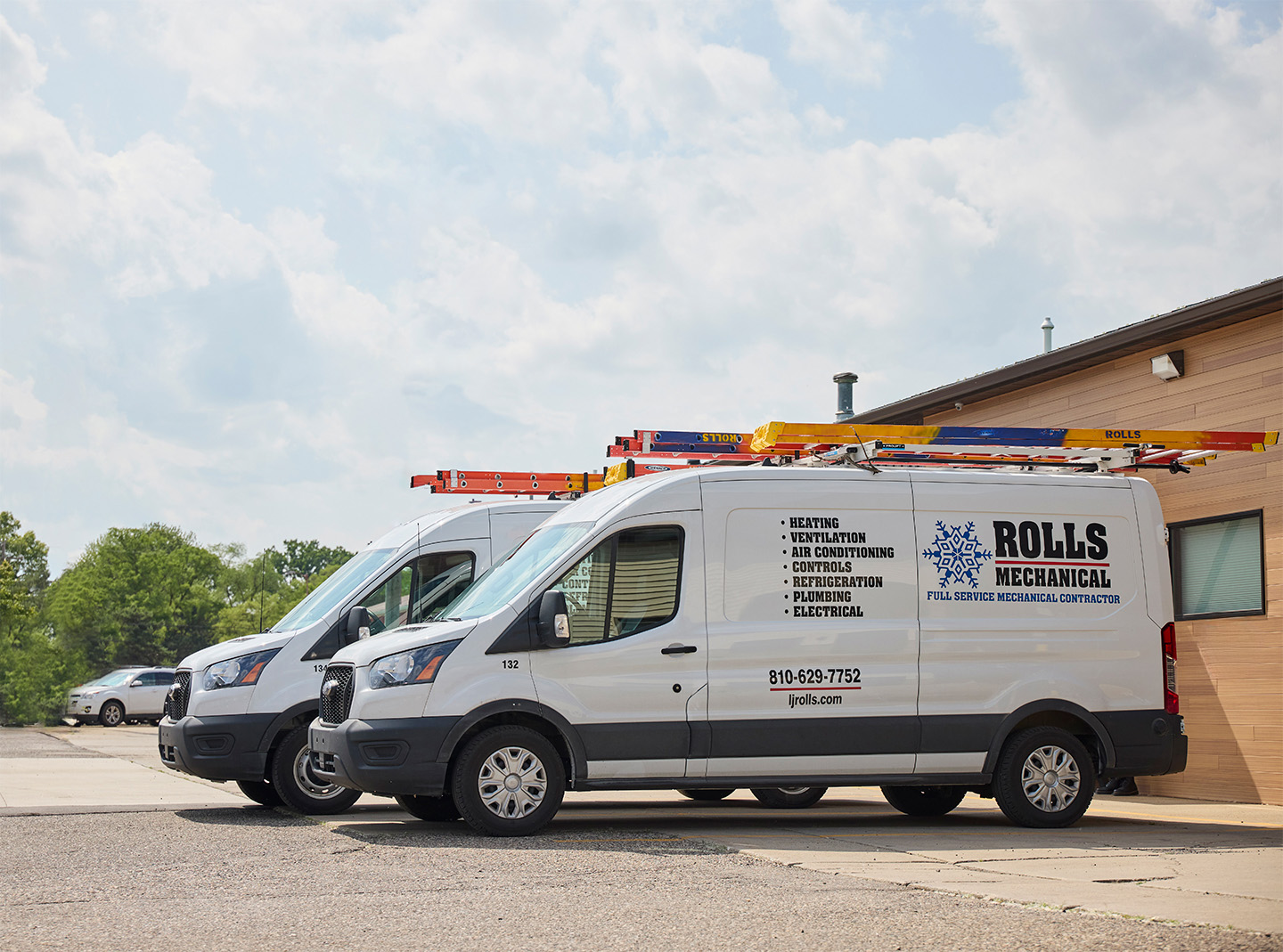
Whether you are dealing with a water heater that runs out of hot water too quickly, a unit making sounds it has never made before, or a pilot light that keeps going out, Rolls Mechanical serves homeowners throughout Birmingham, MI and surrounding areas with licensed water heater repair and replacement that gets your system back to full function without guesswork or unnecessary upselling. Contact us today to schedule a water heater evaluation and find out exactly what your unit needs to perform reliably again.