When a walk in freezer fails, the clock starts immediately. Frozen product can begin to thaw within hours, and inventory that took weeks to stock can be lost before a technician even arrives. Most breakdowns are not sudden surprises. They are the final result of small problems, like iced coils, worn gaskets, and dirty condensers, that went unnoticed. Understanding how a properly maintained commercial refrigeration system stays reliable under constant load helps operators spot trouble early and keep the freezer running through busy seasons.
In this guide, you will learn:
- Why walk-in freezers need a different maintenance approach than coolers
- 8 maintenance tips that prevent the most common freezer breakdowns
- The warning signs that a freezer is heading toward failure
- Which tasks staff can handle and which require a licensed technician
- How to build a simple maintenance routine that fits a busy operation
Why Commercial Walk In Freezers Need Their Own Maintenance Plan

Commercial walk in freezers work much harder than most refrigeration equipment. They hold product at or below zero degrees Fahrenheit, which creates a large temperature difference between the inside of the box and the surrounding air. That difference drives constant frost formation, puts extra stress on the compressor, and demands more from every seal, heater, and control in the system.
For restaurants, grocers, and food distributors in Troy, MI and surrounding areas, a freezer failure during a busy week can mean lost product, missed orders, and emergency repair costs that far exceed the price of routine service. A structured maintenance plan is the most reliable way to keep that from happening.
- Frost Control: Moisture entering a freezer turns to ice on coils, doors, and floors, and without regular attention that ice restricts airflow and damages equipment.
- Compressor Protection: The compressor is the most expensive component in the system, and heavy loads, dirty coils, and low refrigerant all shorten its life.
- Product Safety: Frozen food must stay at safe temperatures continuously, and a documented maintenance program supports compliance with health inspections.
- Energy Savings: A freezer with clean coils, tight seals, and working defrost controls uses significantly less electricity than one running under strain.
- Predictable Costs: Planned service is budgetable, while emergency repairs, overtime labor, and spoiled inventory are not.
8 Walk-In Freezer Maintenance Tips to Avoid Breakdowns
These eight tips cover the areas where freezer failures most often begin. Some are daily or weekly habits that any trained staff member can handle, while others call for a certified refrigeration technician. Work through them in order, and assign each task to a specific person so it does not fall through the cracks.
1. Keep Door Gaskets Sealed and Free of Ice
The door gasket is the first line of defense against warm, moist air. In a freezer, a damaged gasket does more harm than in a cooler because every bit of humidity that leaks in freezes on the evaporator coil and around the door frame. Over time, that ice buildup creates a cycle of restricted airflow, longer run times, and rising energy costs.
Inspect gaskets weekly for tears, hardening, and gaps, and wipe away ice or debris that prevents a tight seal. A simple paper test works well: close the door on a strip of paper and pull gently. If it slides out easily, the gasket is not sealing at that point.
- Replace any gasket that is cracked, flattened, or no longer pulling tight against the frame
- Never chip ice from a gasket or frame with a sharp tool, since it can slice the rubber and damage the door
- Check the door closer and hinges at the same time, because a door that does not close fully defeats even a perfect gasket
2. Inspect Door Heaters and the Pressure Relief Port
Freezers rely on small heating elements around the door frame and gasket area to prevent ice from freezing the door shut. Many also have a heated pressure relief port that allows air to move in and out as the box temperature changes. When these heaters fail, ice can seal the door or block the port, and either problem can damage the box and trap people inside.
Feel along the door frame during operation, since it should be slightly warm to the touch rather than frozen. Look at the relief port for ice or frost buildup, and report any cold spots immediately.
- A door that sticks or is hard to open often signals a failed frame heater
- Ice around the pressure relief port can lead to vacuum buildup and a door that is difficult to open
- Heater repairs involve electrical components and should be handled by a qualified technician
3. Watch the Evaporator Coil and Defrost Cycle
The evaporator coil inside the freezer collects frost as it removes heat and moisture from the air. A scheduled defrost cycle, using electric heaters or hot gas, melts that frost so the coil can keep working. When defrost controls fail, ice builds layer upon layer until air can barely pass through the coil, and temperatures begin to climb.
Look at the evaporator during normal operation. A light, even frost is normal, but heavy ice, ice that appears in one section only, or ice that remains after a defrost cycle points to a problem with the defrost system, airflow, or refrigerant charge.
- Observe a full defrost cycle periodically to confirm the coil clears completely
- Check that drain pans and drain lines are free of ice so meltwater can leave the box
- Call a technician when ice blocks the coil, since chipping it by hand can puncture refrigerant tubing
4. Verify Drain Line Heaters
Meltwater from every defrost cycle must travel through a drain line to a floor drain. In a freezer, that line passes through a freezing environment, so it has its own heating element to keep the water flowing. If the drain heater fails, water refreezes in the line, backs up into the pan, and spills onto the floor of the freezer, where it turns to a sheet of ice.
Look for ice at the drain line exit, standing water in the evaporator pan, and ice buildup beneath the unit. These are early signs that the drain system needs attention.
- Confirm the drain line is insulated and the heater is warm to the touch during and after defrost
- Keep the area around the floor drain clean and free of obstructions
- Do not pour hot water repeatedly into a frozen drain as a routine fix, since it only hides the underlying heater problem
5. Clean Condenser Coils on Remote Refrigeration Systems for Better Energy Efficiency
The condenser rejects heat from the system to the surrounding air, and it can only do that if air flows freely through the coil. Many commercial installations use remote refrigeration, with the condensing unit mounted on a roof or exterior pad away from the box, which makes the condenser easy to forget until performance drops. A clean coil also protects energy efficiency, since a fouled one can raise electricity use noticeably. Dust, grease, and lint coat the fins over time and force the compressor to run harder and hotter. In a freezer, where the compressor is already under heavy load, a dirty condenser is one of the most common causes of premature failure.
For operations in Troy, MI and surrounding areas, condenser cleaning should be tied to the environment. Kitchens and dusty dock areas may need monthly cleaning, while cleaner spaces can often stretch to quarterly.
- Brush the coil gently and use a coil cleaner or vacuum, always working along the direction of the fins
- Avoid high-pressure water on aluminum fins, which can bend them and restrict airflow
- Keep several inches of clear space around the condensing unit so air can move freely
6. Log Temperatures and Respond to Alarms

A daily temperature log is one of the cheapest and most effective tools in a maintenance program. Freezers should hold product at zero degrees Fahrenheit or below, and a log that shows readings creeping upward over several days reveals a developing problem long before the freezer fails outright.
Treat every alarm as information rather than a nuisance. An alarm that clears itself still means something happened, and a pattern of repeated alarms often points to a defrost, airflow, or refrigerant issue that deserves a service call.
- Use a calibrated thermometer and record readings at the same times each day
- Keep a written procedure for who responds to alarms and what they do first
- Share the log with your service provider so they can see trends rather than guess
7. Keep the Freezer Interior Organized and Airflow Clear
How product is loaded affects how well the freezer performs. Boxes stacked against the evaporator block airflow, cartons pushed against walls prevent cold air from circulating, and overloaded shelves create warm pockets where food thaws unevenly. Overpacking also forces the system to run longer to pull down temperature after each restock.
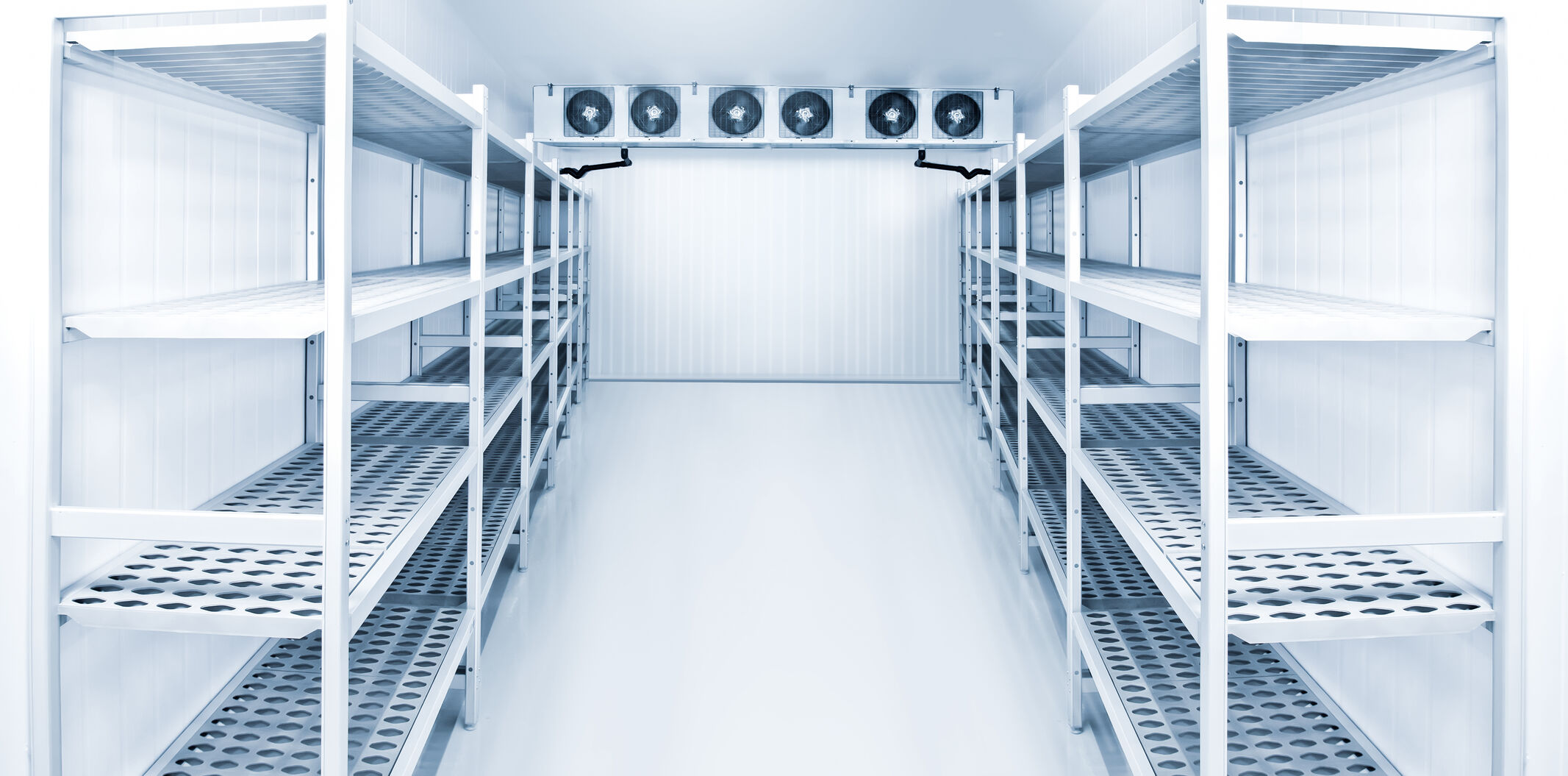
Keep product away from the evaporator fans, leave space between stacks, and use shelving that allows air to move around items. Sweep or squeegee spills promptly, since liquid that freezes on the floor creates slip hazards and can damage floor panels.
- Maintain a clear zone in front of the evaporator unit
- Load warm product in small batches when possible, rather than all at once
- Store items on racks off the floor to protect floor panels and allow cleaning
8. Schedule Professional Inspections Twice a Year, Including Outdoor Walk-In Freezers
Some parts of freezer maintenance require specialized training and tools. A certified technician can check refrigerant charge, test for leaks, measure compressor amp draw, inspect electrical connections, test defrost and heater circuits, and confirm that controls are calibrated. These checks catch problems that daily observation cannot see.
Twice-yearly service is a good baseline for most freezers, with extra visits for heavy-use or older equipment. Outdoor walk-in freezers deserve particular attention because rain, snow, and wide temperature swings accelerate wear on panels, seals, and electrical components. Schedule one visit before the hottest part of the year, when condensers and compressors face the greatest strain, and one before winter.
- Ask for a written report after every visit and keep it with your equipment records
- Confirm the technician holds current EPA certification for refrigerant handling
- Address small repair recommendations promptly, since delay often turns minor wear into major failure
Warning Signs Your Walk-In Freezer Is Heading Toward a Breakdown

Even a well-maintained freezer can develop problems between service visits. Knowing what to watch for allows you to call for help before product is at risk. These signs deserve attention the day you notice them.
- Rising Temperatures: A freezer that drifts above its setpoint, even slightly, is working harder than it should and may be losing capacity.
- Heavy Ice Buildup: Thick ice on the evaporator, ceiling, floor, or around the door points to a defrost, drain, gasket, or heater problem.
- Long Run Times: A compressor that seems to run constantly may be fighting dirty coils, a leak, or a failing component.
- Unusual Noises: Grinding, rattling, or squealing from the condensing unit or evaporator fans can signal motor or bearing wear.
- Frequent Alarm Events: Repeated alarms, even brief ones, are a sign that conditions are unstable and a technician should investigate.
- Higher Energy Bills: A sudden or steady increase in electricity use without a change in operations often reflects equipment under strain.
What Grocery Stores and Convenience Stores Should Do When a Problem Appears
Document what you see, including the time, the temperature, and any visible ice or noise. Grocery stores and convenience stores with limited backup freezer space should know in advance where product can be moved, and they should move at-risk product if temperatures are climbing, then call the service provider promptly rather than waiting to see if the problem resolves. For businesses in Troy, MI and surrounding areas, having a service partner with 24/7 emergency response can be the difference between a quick fix and a total loss.
Who Should Handle Which Task for a Walk In Cooler or Freezer
Not every task requires a technician, but some absolutely do, and most of this division applies equally to a walk in cooler and a freezer. Splitting the work correctly keeps costs down while protecting safety and the equipment. This table summarizes a practical division of responsibilities.
| Task | Frequency | Who Should Handle It |
| Temperature log and alarm review | Daily | Trained staff |
| Check for ice around door, floor, and drain | Daily to weekly | Trained staff |
| Gasket inspection and cleaning | Weekly | Trained staff |
| Interior organization and airflow check | Weekly | Trained staff |
| Condenser coil cleaning | Monthly to quarterly | Trained staff or technician |
| Observe defrost cycle and evaporator condition | Monthly | Trained staff, with technician follow-up |
| Heater, defrost, and electrical testing | Twice a year | Licensed technician |
| Refrigerant charge and leak check | Twice a year | EPA-certified technician |
| Compressor and motor inspection | Twice a year | Licensed technician |
Building a Routine That Sticks Across All Your Walk-Ins
The most effective maintenance programs are simple. Post a short checklist near the freezer, assign each task to a named person, and review the log weekly. When staff understand why each task matters, they are more likely to report problems early, which is what keeps a small issue from becoming a breakdown.
Keep Your Walk-In Freezer Running When You Need It Most
A walk-in freezer is not a piece of equipment you want to think about often, and consistent maintenance is what makes that possible. The eight tips above target the most common causes of failure, from worn gaskets and iced coils to dirty condensers and neglected heaters, and together they form a practical program that protects both your equipment and your inventory.
When it is time for professional service, Rolls Mechanical works with commercial and industrial clients throughout Troy, MI and surrounding areas, providing licensed refrigeration maintenance, repair, and emergency response backed by thorough documentation. Contact us today to schedule a walk-in freezer inspection and keep your equipment reliable, efficient, and ready for whatever your business demands.