
For any commercial kitchen, food service operation, or cold storage business, a walk in cooler is not optional infrastructure. It is the backbone of daily operations, and when it fails, the consequences show up immediately in product loss, compliance risk, and emergency repair costs that could have been avoided entirely with consistent attention. The principles of proactive care that apply to keeping other commercial mechanical systems in your facility running reliably apply with equal force here: the maintenance you do today determines whether your cooler performs for 15 years or needs major repairs in five.
In this guide, you will learn:
- Why a structured maintenance program is the most cost-effective investment you can make in your walk-in cooler
- 8 practical maintenance tips that extend equipment life and protect your product
- Seasonal considerations specific to Michigan climates that affect walk-in cooler performance
- The warning signs that tell you professional service is needed before a breakdown occurs
- How to build a maintenance culture among staff that supports the equipment’s longevity
Why Commercial Walk In Coolers Matter for Restaurants and Convenience Stores

Awalk-in cooler is one of the most mechanically complex pieces of equipment in a commercial operation, and it is also one of the most continuously stressed. Unlike an oven that heats to temperature and holds, or a dishwasher that runs in cycles, a walk-in cooler refrigeration system runs around the clock, managing heat load from product, staff entries and exits, ambient temperature changes, and the internal heat generated by its own electrical components. For restaurants and convenience stores especially, even a few hours of cooler downtime during peak business hours creates losses that ripple through the entire operation.
For food service operations and cold storage businesses in Livonia, MI and surrounding areas, the stakes of a cooler failure extend beyond equipment repair costs. A temperature excursion that compromises product requires documentation, disposal, and potential health department notification. A walk-in cooler that fails during peak service creates an operational crisis that no amount of catch-up service recovers easily.
- Product Protection: A properly maintained walk-in cooler maintains consistent temperatures that keep perishable inventory at safe holding temperatures without fluctuation. Maintenance failures that cause temperature drift put product, revenue, and food safety compliance at risk simultaneously.
- Energy Cost Management: A walk-in cooler with clean coils, tight door seals, and fully charged refrigerant runs at its designed efficiency. Neglected equipment can consume 25 to 40 percent more energy than a maintained unit doing identical work, adding to operating costs month after month.
- Equipment Lifespan: Walk-in cooler refrigeration systems are built to last 15 to 20 years under normal conditions. Systems that operate with dirty condenser coils, failing door gaskets, and low refrigerant reach major component failures at half that age, forcing capital replacement decisions that could have been deferred significantly.
- Health Code Compliance: Health department inspections evaluate walk-in cooler temperature logs, door seal condition, and general equipment maintenance as part of food safety compliance assessments. A well-documented maintenance program demonstrates the diligence that inspectors are looking for and protects the operation in the event of a complaint or incident.
- Staff Safety: Malfunctioning door latches, compromised floor surfaces from condensate overflow, and refrigerant leaks in enclosed walk-in spaces all create staff safety risks that routine maintenance addresses before they become incidents.
8 Maintenance Tips for Your Commercial Walk In Cooler Unit
These eight tips address every major maintenance area of a walk-in cooler unit, from the refrigeration equipment to the structural components and the operational habits that affect all of them. Work through them systematically and assign ownership to each task so that maintenance becomes a routine rather than a reaction.
1. Inspect and Clean Door Gaskets Every Month
The door gasket is the seal between the walk-in cooler interior and the ambient environment outside. A gasket in good condition creates an airtight contact that prevents warm, humid air from infiltrating the cooler space with every door opening and closing. A gasket that is torn, cracked, hardened, or pulling away from the door frame allows a continuous infiltration of warm air that forces the refrigeration system to work harder, increases internal humidity and frost formation, and raises energy consumption measurably.
Test each gasket monthly using the paper test: close the door on a piece of paper at multiple points around the door perimeter and pull it out. The paper should offer firm resistance at every point. Any location where it slides freely without resistance indicates the gasket is no longer sealing at that point and needs attention.
- Clean gaskets monthly with warm water and a mild detergent to remove food residue and maintain pliability
- Replace gaskets immediately when cracking, tearing, or loss of magnetic pull is observed, regardless of how minor the damage appears
- Check door hinge and closer condition at the same time, as a door that does not close fully or apply even pressure around the frame makes even a perfect gasket ineffective
2. Clean Condenser Coils for Energy Efficient Cooler Operation
The condenser coil is the outdoor-facing component of the walk-in cooler refrigeration system that releases heat from the refrigerant to the surrounding air. When the coil surface is coated with dust, grease, or airborne debris, its ability to reject heat is reduced, which forces the compressor to run harder and longer against elevated head pressure. Maintaining energy efficient operation requires clean coils, and in commercial kitchen environments where grease is present in the air, condenser coils can reach a problematic level of fouling in as little as four to six weeks.
Clean condenser coils using a commercial coil cleaner applied to the coil face before a low-pressure rinse from inside out. Schedule this cleaning monthly in high-grease environments and quarterly in cleaner settings, and document each cleaning with the date and the name of the person who performed it.
- Never use a high-pressure washer directly on condenser coil fins, as this bends the delicate aluminum fins and permanently reduces airflow through the coil
- Check that there is at least six inches of unobstructed clearance on all sides of the condenser unit after cleaning
- In Livonia, MI and surrounding areas where coolers are positioned near kitchen exhaust or in tight mechanical spaces, condenser placement relative to heat and grease sources significantly affects how quickly coils foul
3. Check and Flush the Condensate Drain Line Monthly
The walk-in cooler evaporator coil removes moisture from the air inside the cooler as part of its cooling function, and that moisture collects in a drain pan beneath the coil before flowing through the condensate drain line to a floor drain. When the drain line becomes clogged with algae, slime, or food debris, water backs up in the pan and overflows into the cooler floor, creating sanitation problems, slip hazards, and potential water damage to flooring panels and structural components.
Flush the condensate drain line monthly with a diluted bleach solution and check the drain pan for standing water, rust, or biological growth during each inspection. For walk-in coolers with evaporator units positioned above the ceiling level, the drain pan is not always visible during routine inspections, making a monthly intentional flush especially important.
- Add condensate pan treatment tablets to the drain pan monthly to slow biological growth between cleaning visits
- Confirm that the drain line terminates at an accessible floor drain and that the drain cover is in place to prevent pests from using the opening as an entry point
- If the drain line shows evidence of repeated clogging, consider installing a cleanout tee to make future clearing faster and less disruptive
4. Monitor and Log Cold Storage Temperatures Daily

A daily temperature log for the walk-in cooler is simultaneously a regulatory compliance tool, an early warning system for equipment problems, and a record that protects cold storage operations in the event of a food safety dispute. Temperature readings taken at the same time each day, compared against the setpoint, create a baseline that makes developing trends visible before they reach the level of a compliance concern or a product loss event.
A cooler that has consistently held 36 to 38 degrees for months but is now logging 42 to 44 degrees consistently, without any change in loading or ambient conditions, is telling you that the refrigeration system has experienced a change that warrants investigation. Catching that change through a temperature log allows for a planned service call rather than an emergency response.
- Use a calibrated thermometer rather than relying solely on the unit’s built-in thermostat display, which can drift from actual temperature over time
- Log temperatures at least twice daily during operating hours, at opening and before closing, to capture the full range of daily conditions
- Temperature excursions that bring the cold storage space above 41 degrees for more than four hours in a food service application require documentation and may require product disposal under food safety regulations
5. Inspect the Evaporator Coil and Defrost System
The evaporator coil inside the walk-in cooler is the component that absorbs heat from the cooler interior and from the product stored inside. Ice buildup on the evaporator coil, which occurs when the coil surface drops below the freezing point and moisture in the air freezes on contact, is managed by a scheduled or demand-initiated defrost cycle. When the defrost system malfunctions, ice accumulates progressively until airflow through the coil is restricted enough to affect temperature control.
Inspect the evaporator coil visually during each cleaning visit to confirm that frost from the previous defrost cycle has fully cleared. A coil that is consistently iced over between defrost cycles, or that shows ice buildup at specific locations rather than uniformly, indicates a defrost system problem, a refrigerant issue, or an airflow restriction that should be evaluated by a technician.
- Document defrost cycle timing once a month by manually observing a complete cycle and noting whether the coil clears fully before the system returns to cooling mode
- Check the drain pan beneath the evaporator coil during each defrost observation to confirm that meltwater is draining freely
- Ice that accumulates at the base of the evaporator coil rather than uniformly across the surface often indicates a refrigerant distribution issue within the coil
6. Test Door Hardware and Latching Mechanisms
Walk-in cooler doors experience more mechanical stress than almost any other component in the system. They are opened and closed dozens to hundreds of times per day, often by staff carrying product in both hands, and they are exposed to temperature differentials that expand and contract the door panel with every cycle. Door hinges wear, closers lose tension, latch mechanisms develop play, and safety release handles require regular inspection to confirm they function correctly in the event someone is accidentally locked inside.
Test all door hardware monthly, including hinges, closers, latches, and safety release mechanisms. A door that does not close and latch completely without manual pressure is not sealing properly regardless of the gasket condition, and it should be adjusted or repaired promptly.
- Safety interior release mechanisms must function correctly at all times, no exceptions, and should be tested by simulating operation from inside the cooler during each monthly inspection
- Keep a log of door hardware adjustments and repairs to track components that require recurring service, which may indicate that replacement rather than continued adjustment is more economical
- For high-traffic walk-in coolers in Livonia, MI and surrounding areas where doors open and close 50 or more times per day, quarterly hardware inspection rather than monthly may be appropriate
7. Schedule Annual Professional Service Including Electrical Requirements
Walk-in cooler refrigeration systems should be serviced annually by a licensed, EPA Section 608 certified technician who can verify refrigerant charge, perform a leak detection sweep, check all electrical requirements for compliance, and document all findings. Refrigerant does not deplete during normal operation, so any reduction in charge indicates a leak that must be located and repaired before the system is recharged. Meeting all electrical requirements at each annual service visit also protects the operation from code deficiencies that can surface during health department or fire marshal inspections.
Annual service also provides an opportunity for the technician to measure compressor amp draw against nameplate values, test capacitors and contactors, inspect refrigerant piping for signs of oil staining that indicate a leak, and evaluate whether the system is operating within its designed pressure and temperature parameters.
- Request a written service report from every professional maintenance visit and retain it with the unit’s documentation package
- Confirm that the technician performing refrigerant service holds a current EPA Section 608 certification for the refrigerant type in your system before authorizing the work
- For walk-in coolers that have not had documented professional service in more than two years, request a full diagnostic evaluation rather than a simple refrigerant check to establish a current performance baseline
8. Keep the Cooler Interior Clean and Organized
The interior of a walk-in cooler is part of the refrigeration system in the sense that product placement, cleanliness, and organization directly affect how hard the refrigeration equipment must work. A cooler packed so tightly that air cannot circulate around the product forces the evaporator fan to work harder against restricted airflow. Spilled liquids that are left on the floor freeze into ice that damages flooring panels and creates tripping hazards. Boxes placed directly against the evaporator coil restrict airflow and interfere with the defrost cycle.
Establish cleaning and organization protocols for the walk-in cooler interior that are part of regular closing procedures. Floors should be swept and mopped, product should be organized with airflow space maintained around all items, and nothing should be stored in contact with the evaporator coil or blocking the evaporator fan.
- Use wire shelving rather than solid shelving wherever possible to allow air circulation around stored product
- Keep a minimum of six inches of clearance between the top of stored product and the evaporator unit
- Floor panels in walk-in coolers are designed to withstand specific load ratings, and overloading a single panel with excessively heavy equipment or product can cause cracking that allows moisture infiltration into the panel foam insulation
Cooler Options and Seasonal Maintenance for Michigan Walk In Coolers
Michigan’s climate creates seasonal maintenance challenges for walk-in coolers that operations in warmer climates do not face. Understanding how coolers walk through seasonal demands unique to Michigan keeps your system out of emergency territory and running efficiently year-round. Addressing these challenges proactively prevents cold-weather failures that can be more disruptive and more expensive than summertime problems. Whether you are evaluating cooler options for a new installation or maintaining an existing system, seasonal awareness is part of a complete maintenance approach.
Summer Considerations
Summer brings peak ambient temperatures that place maximum stress on the condenser side of the refrigeration system. Condenser coils that are marginal during mild weather often push the system into high-pressure lockout conditions during sustained summer heat. Clean condenser coils before the summer cooling season begins and increase the cleaning frequency during July and August to compensate for the higher load on the condenser.
For walk-in coolers located in kitchens where ambient temperatures rise significantly during service hours, ensure that the condenser unit is positioned to draw relatively cooler air rather than the hottest air in the mechanical space. Even a five-degree reduction in the ambient air temperature surrounding the condenser produces a meaningful improvement in condensing efficiency and compressor load.
Winter Considerations
Cold Michigan winters create a different set of challenges for walk-in coolers, particularly for condensing units located outdoors or in unheated mechanical spaces. Condensing units that are designed for a minimum ambient temperature can experience refrigerant migration, oil thickening, and control malfunctions when operated at temperatures below their design range without appropriate low-ambient controls.
For walk-in coolers in Livonia, MI and surrounding areas with outdoor condensing units, confirm with a technician whether the unit is equipped with the low-ambient controls required for reliable cold-weather operation, and inspect those controls at the start of each winter season before sustained cold weather arrives.
Signs Your Walk-In Cooler or Freezer Needs Immediate Professional Attention

Even with a thorough maintenance program in place, problems develop that require professional service outside the scheduled maintenance cycle. Whether the unit is a cooler or freezer, knowing which signs indicate an urgent situation versus one that can wait for the next scheduled visit prevents both unnecessary emergency service premiums and delayed responses to genuinely urgent conditions.
- Temperature Consistently Above Setpoint: A cooler that cannot reach or maintain its setpoint temperature despite normal loading and ambient conditions has a refrigeration system problem that requires same-day service in a food service application where product safety depends on temperature control.
- Ice Blocking the Evaporator Coil: Visible ice completely covering the evaporator coil with no air movement through the unit indicates a defrost system failure that will result in complete temperature control loss within hours if not addressed.
- Loud or Unusual Compressor Noises: Banging, grinding, or rattling sounds from the condensing unit that were not present before indicate mechanical distress inside the compressor or fan motor that requires professional evaluation before continued operation causes catastrophic failure.
- Refrigerant Odor Inside the Cooler: A chemical smell resembling acetone, ammonia, or a sweet ether-like odor inside the cold storage space indicates a refrigerant leak that requires immediate ventilation of the space and a professional leak detection and repair service.
- Repeated Circuit Breaker Trips: A condensing unit that repeatedly trips its circuit breaker is drawing more current than the circuit can supply, which indicates a motor problem, a locked compressor, or an electrical fault that creates both an equipment risk and a fire hazard if the breaker is repeatedly reset.
Keep Your Custom Walk In Cooler Running the Way Your Business Depends On
A custom walk in cooler that receives consistent, documented maintenance runs more efficiently, lasts longer, and fails far less often than equipment that is serviced only when something stops working. The eight maintenance tips above give operators at every experience level a practical framework for protecting their investment and their product, from the daily temperature logs that catch developing problems early to the annual professional service that addresses what in-house maintenance cannot reach.
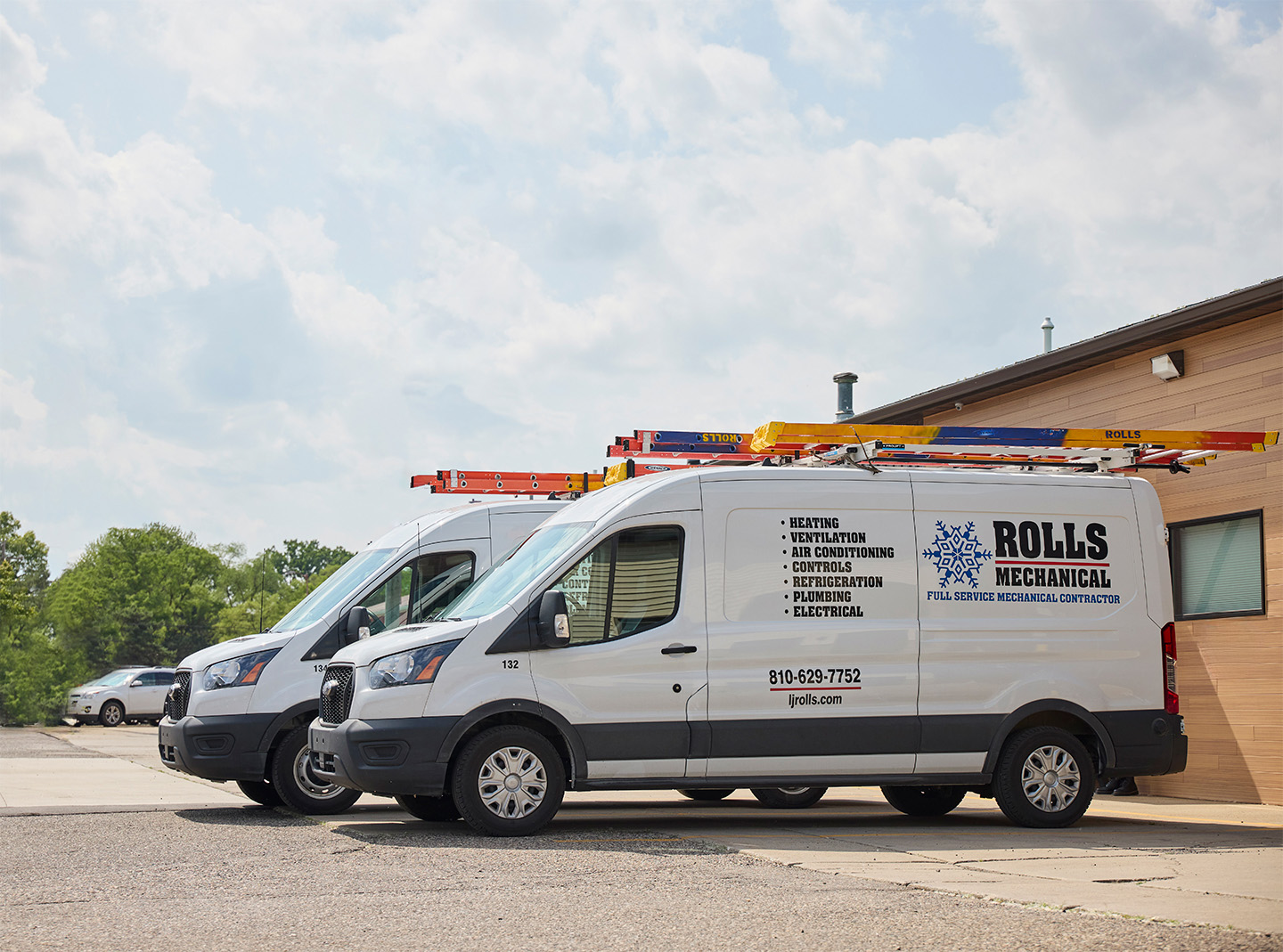
When professional service is needed, having the right partner makes the difference between a quick, accurate diagnosis and a guessing process that costs time and product. Rolls Mechanical serves commercial walk in coolers, convenience stores, restaurants, and food service operations throughout Livonia, MI and surrounding areas with licensed walk-in cooler maintenance, repair, and refrigeration service backed by the documentation and expertise that regulated operations require. Contact us today to schedule a walk-in cooler assessment and make sure your system is performing the way your business depends on it to.