
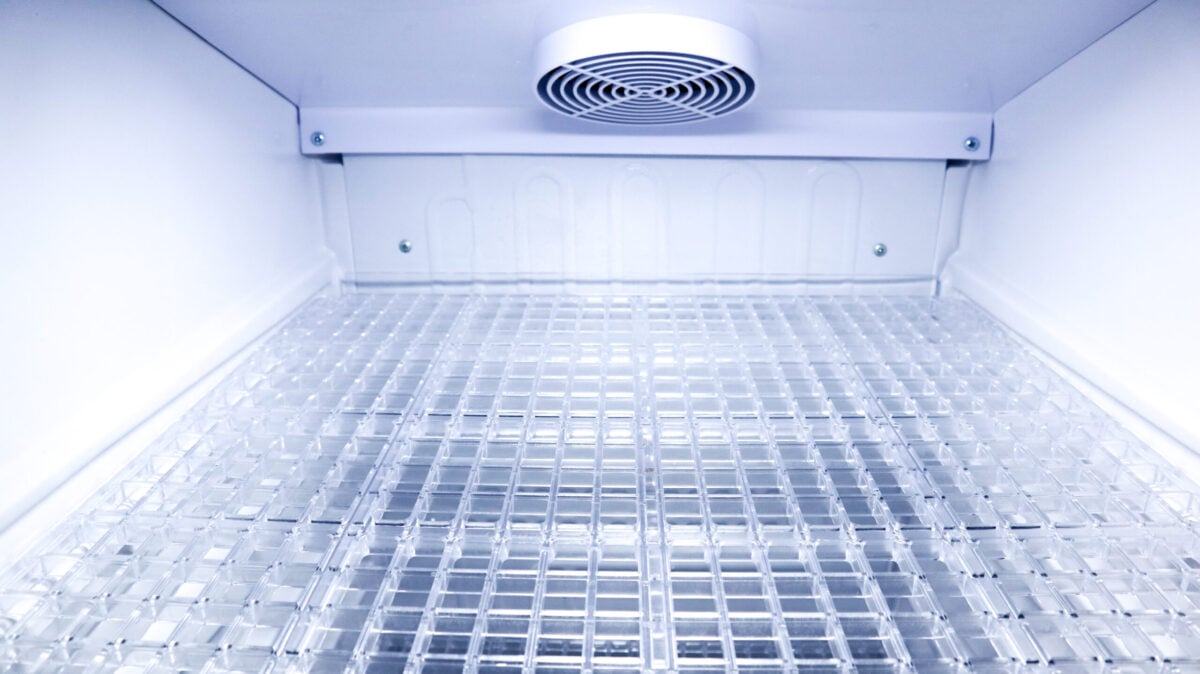
Most people who work around commercial refrigeration systems every day have never been walked through exactly what is happening inside the equipment they depend on. Understanding the refrigeration cycle is not just academic knowledge for basic refrigeration technicians. It is the foundation for recognizing early warning signs, communicating clearly with service teams, and making better decisions about equipment maintenance and replacement. The same principles that determine how refrigeration systems in commercial and industrial settings are engineered to perform apply across every piece of equipment from a small reach-in cooler to a large-scale industrial cold storage facility.
In this guide, you will learn:
- Why understanding the basic refrigeration cycle gives you a meaningful advantage as an operator or facility manager
- The 4 key stages of the refrigeration cycle and what is happening in each one
- How refrigerant properties including boiling point make the entire process possible
- How cycle knowledge connects directly to system diagnostics and troubleshooting
- What the most common cycle disruptions look like and what they mean for your equipment
Why the Basic Refrigeration Cycle Is Worth Understanding

A refrigeration system is not simply a machine that makes things cold. At its core, refrigeration is the process of moving heat from one location to another using the physical properties of a refrigerant to absorb and release energy at different points in the cycle. This applies whether you are dealing with a commercial reach-in cooler, a central air conditioner, or a large industrial heat pump that serves an entire facility. When that heat-transfer process works correctly and efficiently, temperatures hold steady, energy consumption stays predictable, and equipment lasts for years without unexpected failures.
When any stage of the basic refrigeration cycle is disrupted, the effects show up in ways that are observable and measurable if you know what to look for. For facility managers and commercial operators in Troy, MI and surrounding areas responsible for refrigeration systems that run continuously, understanding the cycle is what allows early problem detection rather than waiting for a failure to make itself known through product loss or a system shutdown.
- Better Communication With Technicians: Operators who understand the refrigeration cycle can describe symptoms more accurately, ask better questions, and evaluate the technician’s diagnosis against their own understanding of how the system should be behaving.
- Earlier Problem Detection: Many refrigeration cycle disruptions produce observable symptoms, including temperature inconsistency, unusual sounds, ice formation, and energy consumption changes, that can be recognized and reported before they progress to component failure.
- Smarter Maintenance Decisions: Understanding which stage of the cycle a given maintenance task supports helps operators prioritize service activities and understand why certain tasks have the impact they do on refrigeration systems performance.
- More Accurate Vendor Conversations: Operators who understand the cycle can evaluate equipment specifications, efficiency ratings, and proposed upgrades with more confidence and less reliance on taking a salesperson’s word for the claims being made.
- Faster Recovery From Failures: When a system does fail, operators with cycle knowledge can often identify which stage is involved based on the symptoms, which helps a technician diagnose faster and reduces downtime.
The 4 Key Stages of the Refrigeration Cycle
The refrigeration cycle is a closed-loop process in which refrigerant continuously circulates through four distinct stages, changing state between liquid and vapor as it absorbs and releases heat. The sequence repeats continuously as long as the system is running, and each stage depends on the one before it producing the correct conditions for the next stage to function as intended.
The four stages are compression, condensation, expansion, and evaporation. Each stage is defined by what is happening to the refrigerant’s pressure, temperature, and physical state at that point in the circuit.
1. Compression
The refrigeration cycle begins at the compressor. At this stage, the refrigerant arrives as a low-pressure, low-temperature vapor that has just absorbed heat from the refrigerated space. The compressor’s job is to increase the pressure of this vapor by mechanically compressing it, which raises its temperature significantly in the process.
The compressed refrigerant leaves the compressor as a high-pressure, high-temperature superheated vapor. The temperature elevation is not a waste product of the process. It is essential to what happens next, because the refrigerant must be hotter than the ambient air surrounding the condenser in order for the process of moving heat to work in the right direction.
- The compressor is the only stage of the refrigeration cycle that requires external energy input, which is why compressor efficiency directly determines the system’s overall energy consumption
- Suction pressure at the compressor inlet and discharge pressure at the outlet are the primary measurement points for evaluating cycle performance at this stage
- A compressor that is working harder than normal, reflected in elevated discharge temperatures and amp draw, is compensating for a problem elsewhere in the cycle
2. Condensation and Heat Exchange
From the compressor, the high-pressure, high-temperature refrigerant vapor travels to the condenser, which functions as a heat exchanger that removes heat from the refrigerant and transfers it to the surrounding environment. As the refrigerant releases heat through this heat exchanger, it cools to its saturation temperature and condenses from a vapor back into a liquid refrigerant, completing what is called the high-side of the refrigeration cycle.
In air-cooled refrigeration systems and air conditioning equipment, the condenser rejects heat to the ambient air using a coil and a fan that moves air across the coil surface. A heat pump uses the same heat exchanger principle but can reverse the cycle direction to provide heating rather than cooling, moving heat into the conditioned space rather than out of it. In water-cooled systems, the condenser transfers heat to a water supply rather than to the air.
The cleanliness of the condenser coil is critical to this stage. For commercial operators in Troy, MI and surrounding areas dealing with dusty, greasy, or high-humidity environments, condenser coil contamination is the single most common cause of elevated condensing temperature and the cascade of efficiency losses and component stress that follows.
- Subcooling is the measurement of how far below the saturation temperature the liquid refrigerant has been cooled before leaving the heat exchanger, and it is an important indicator of condenser performance
- High condensing pressure caused by a dirty coil or restricted airflow forces the compressor into a higher compression ratio, which increases energy consumption and accelerates compressor wear
- The condenser coil should be clean enough that the condensing temperature is no more than 20 to 30 degrees Fahrenheit above the ambient air temperature surrounding the unit
3. Expansion Through the Metering Device

The high-pressure liquid refrigerant leaving the condenser enters the expansion device, which serves as the metering device of the refrigeration cycle. The metering device, which may be a thermostatic expansion valve, an electronic expansion valve, or a fixed orifice depending on the system design, creates a controlled pressure drop that allows the liquid refrigerant to expand rapidly.
This rapid pressure drop lowers the refrigerant’s temperature significantly, often to well below the temperature of the refrigerated space, through a process called flash evaporation. A portion of the liquid refrigerant evaporates almost instantly at the expansion device as it absorbs the heat required for evaporation from the remaining liquid refrigerant, dropping the mixture’s temperature to the saturation point corresponding to the new low-side pressure.
The metering device is a critical control point in the refrigeration cycle because it regulates how much refrigerant enters the evaporator. Too much liquid refrigerant entering the evaporator can result in liquid reaching the compressor, which causes serious mechanical damage. Too little starves the evaporator and reduces system capacity. The superheat measurement at the evaporator outlet is the primary indicator of whether the expansion device is calibrated correctly.
- Thermostatic expansion valves (TXV) use a sensing bulb at the evaporator outlet to modulate liquid refrigerant flow in response to changes in load
- Electronic expansion valves (EEV) provide more precise control and are increasingly common in variable-capacity commercial refrigeration systems
- A malfunctioning metering device is a common cause of erratic superheat readings, reduced system capacity, and compressor damage from liquid slugging
4. Evaporation
The low-pressure, low-temperature refrigerant mixture that exits the expansion device enters the evaporator coil, where the remaining liquid refrigerant completes its evaporation by absorbing heat from the refrigerated space. This is the stage where the useful refrigeration effect actually occurs. The refrigerant absorbs latent heat from the air or product in the refrigerated space, cooling the space in the process, and exits the evaporator as a low-pressure vapor that returns to the compressor to begin the refrigeration cycle again.
The evaporator’s ability to absorb heat efficiently depends on airflow across the coil surface, the cleanliness of the coil, the liquid refrigerant distribution within the coil, and the temperature differential between the refrigerant and the space being cooled. Ice formation on the evaporator coil, which is one of the most common operational issues in commercial refrigeration systems, insulates the coil surface and reduces its ability to absorb heat, which directly diminishes the system’s cooling capacity.
For commercial operations in Troy, MI and surrounding areas whose refrigeration equipment runs in high-humidity environments, evaporator coil icing between defrost cycles is a reliable indicator that something in the cycle is not functioning as designed, and it should prompt investigation rather than simply being defrosted and reset.
- Superheat at the evaporator outlet is measured as the temperature of the refrigerant vapor above the saturation temperature at that pressure and should fall within the range specified for the particular system
- A low superheat reading indicates too much liquid refrigerant in the evaporator and risk of liquid returning to the compressor
- A high superheat reading indicates insufficient refrigerant flow through the evaporator and reduced system capacity
How Refrigerant Properties Make the Cycle Possible
The basic refrigeration cycle works because of a fundamental property of matter: substances absorb heat when they evaporate and release heat when they condense, and the temperature at which these phase changes occur is directly related to pressure. The boiling point of a refrigerant is not a fixed value the way water boils at 212 degrees Fahrenheit at sea level. Instead, the boiling point shifts up and down in direct response to the pressure applied to the refrigerant, which is exactly what the refrigeration cycle exploits to move heat across temperature gradients that would otherwise be thermodynamically impossible.
- Boiling Point and Pressure: By controlling pressure at different points in the circuit, refrigeration systems can make the boiling point of liquid refrigerant fall well below the temperature of the refrigerated space in the evaporator, and rise well above ambient temperature in the condenser. The entire cycle depends on this pressure-driven shift in boiling point.
- Latent Heat of Vaporization: The large amount of energy absorbed when liquid refrigerant evaporates is what makes the evaporation stage so effective at removing heat from the refrigerated space. This latent heat effect is the primary mechanism of moving heat out of a refrigerated environment.
- Heat Pump and Reversibility: A heat pump exploits the same refrigeration cycle in reverse, using the condenser’s heat release function to warm a space rather than cool it. Understanding that a heat pump is simply a refrigeration cycle operating in the opposite direction explains why heat pumps can both heat and cool using the same equipment and refrigerant circuit.
- Refrigerant Selection and Regulation: The refrigerants used in commercial and industrial refrigeration systems have changed significantly due to environmental regulations. Current systems use refrigerants including R-404A, R-448A, R-449A, and CO2, each with distinct pressure-temperature and boiling point characteristics that affect equipment design, operating pressures, and service requirements.
- Oil Miscibility: Commercial refrigerants carry lubricating oil throughout the refrigeration cycle, and the oil must return reliably to the compressor crankcase to prevent lubrication failure. System designs that compromise oil return cause oil to accumulate in the evaporator and starve the compressor of lubrication over time.
How Cycle Knowledge Connects to Diagnosis and Troubleshooting

Understanding the refrigeration cycle transforms the way a system’s symptoms are interpreted. Rather than observing that a system is not cooling and waiting for a technician to investigate, an operator who understands the cycle can begin narrowing down which stage is likely involved based on what the system is doing and measuring.
Reading Pressures Against the Cycle
Suction pressure that is lower than normal for the operating conditions points to a problem on the low side of the cycle, most commonly a liquid refrigerant shortage, a restriction at the metering device, or a capacity problem in the evaporator. Discharge pressure that is higher than normal points to a problem on the high side, most commonly condenser fouling, inadequate airflow through the heat exchanger, or an overcharged refrigeration system.
Pressures that are both abnormally low suggest a refrigerant loss rather than a restriction, because a restriction alone would show normal or elevated high-side pressure with low suction pressure. A technician who shows up to a low-pressure system call with this context already established can begin leak detection rather than spending the first portion of the service call building the same diagnostic picture that an informed operator could have described over the phone.
Connecting Symptoms to Stages
Ice on the evaporator coil between defrost cycles points to stage four and can be caused by low liquid refrigerant charge, a malfunctioning metering device, or restricted airflow across the coil. Elevated discharge temperature at the compressor outlet points to stage one or stage two and can indicate a dirty heat exchanger, high ambient temperature, or a compressor losing pumping efficiency. Erratic temperature control in the refrigerated space with otherwise normal pressures points to the expansion device or the defrost system rather than the compressor or condenser.
Whether the system in question is a commercial air conditioner serving an office building, an air conditioning system in a multi-tenant facility, or an industrial cold storage refrigeration system, the diagnostic framework is the same because the basic refrigeration cycle is the same. For commercial and industrial operators in Troy, MI and surrounding areas managing refrigeration systems where every hour of downtime has a measurable cost, building this level of diagnostic awareness into routine operations is one of the highest-return investments available in the ongoing management of refrigeration equipment.
Put Your Refrigeration Cycle Knowledge to Work
Understanding the refrigeration cycle is not just theoretical. It changes how you monitor your equipment, how you respond to the first signs of a problem, and how you partner with the technicians responsible for keeping your refrigeration systems running. The four stages covered above, along with the role of boiling point, liquid refrigerant behavior, and the metering device, give you the conceptual foundation to engage with your equipment as an informed operator rather than a passive observer waiting for something to fail.
When system behavior suggests that something in the cycle is not performing correctly, having the right technical partner makes the difference between a fast, accurate diagnosis and an extended troubleshooting process that costs time and product. Rolls Mechanical serves commercial and industrial clients throughout Troy, MI and surrounding areas with the refrigeration expertise, diagnostic equipment, and cycle-level technical knowledge needed to identify and resolve problems at their source. Contact us today to schedule a refrigeration system evaluation and make sure every stage of your cycle is performing exactly the way it should.