A backyard feels different once there is a fire in it. The space becomes a gathering place that works from the first cool evenings of spring through the late days of fall. Outdoor fireplaces bring that warmth and atmosphere to patios, decks, and gardens, and the design you choose determines how the space looks, how it functions, and how safely it works. Seeing how a well-planned fireplace is built to perform and last helps you think through materials, fuel, and layout before the first stone is set.
In this guide, you will learn:
- Why an outdoor fireplace adds comfort, value, and usable space to a Michigan yard
- 8 design ideas that suit different homes, budgets, and entertaining styles
- The safety, code, and fuel considerations to settle before you build
- How wood, natural gas, and propane options compare
- How to protect your fireplace through Michigan’s freeze and thaw seasons
Why Outdoor Fireplaces Are Worth Planning Carefully

An outdoor fireplace is more than a decorative feature. It extends the season you can spend outside, creates a natural gathering point, and gives a yard a focal point that you can see from inside the house. Unlike a simple fire pit, a fireplace has a chimney or backdrop that directs smoke and heat, which makes it more comfortable to sit near and more flexible in how it can be designed.
For homeowners in Birmingham, MI and surrounding areas, where evenings cool off quickly and many properties have mature landscaping and defined patio spaces, an outdoor fireplace can turn an underused corner into the most popular spot at home. The key is planning the design, placement, and fuel type so the finished result is as safe and enjoyable as it looks on paper.
- Longer Outdoor Season: A fireplace takes the chill off cool evenings, which lets you enjoy your patio for weeks or even months longer each year.
- Entertaining Focal Point: A fireplace pulls people together and gives gatherings a natural center, whether you are hosting a dinner or a quiet evening with family.
- Added Home Value: A well-built outdoor living space with a fireplace is a feature buyers notice and remember, and it contributes to the overall appeal of the property.
- Design Flexibility: Outdoor fireplaces can be traditional, modern, rustic, or somewhere in between, so they can match the style of the home and landscape.
- Smoke and Heat Control: A fireplace with a chimney or backdrop manages smoke better than an open fire pit and directs heat toward the seating area.
6 Outdoor Fireplace Design Ideas for Your Backyard
These eight ideas range from classic masonry to sleek modern gas designs. Each one works best in a particular kind of space, so consider how you plan to use your yard before choosing, and keep in mind that many homeowners blend elements from several ideas into one design.
1. Classic Stone Masonry Fireplace
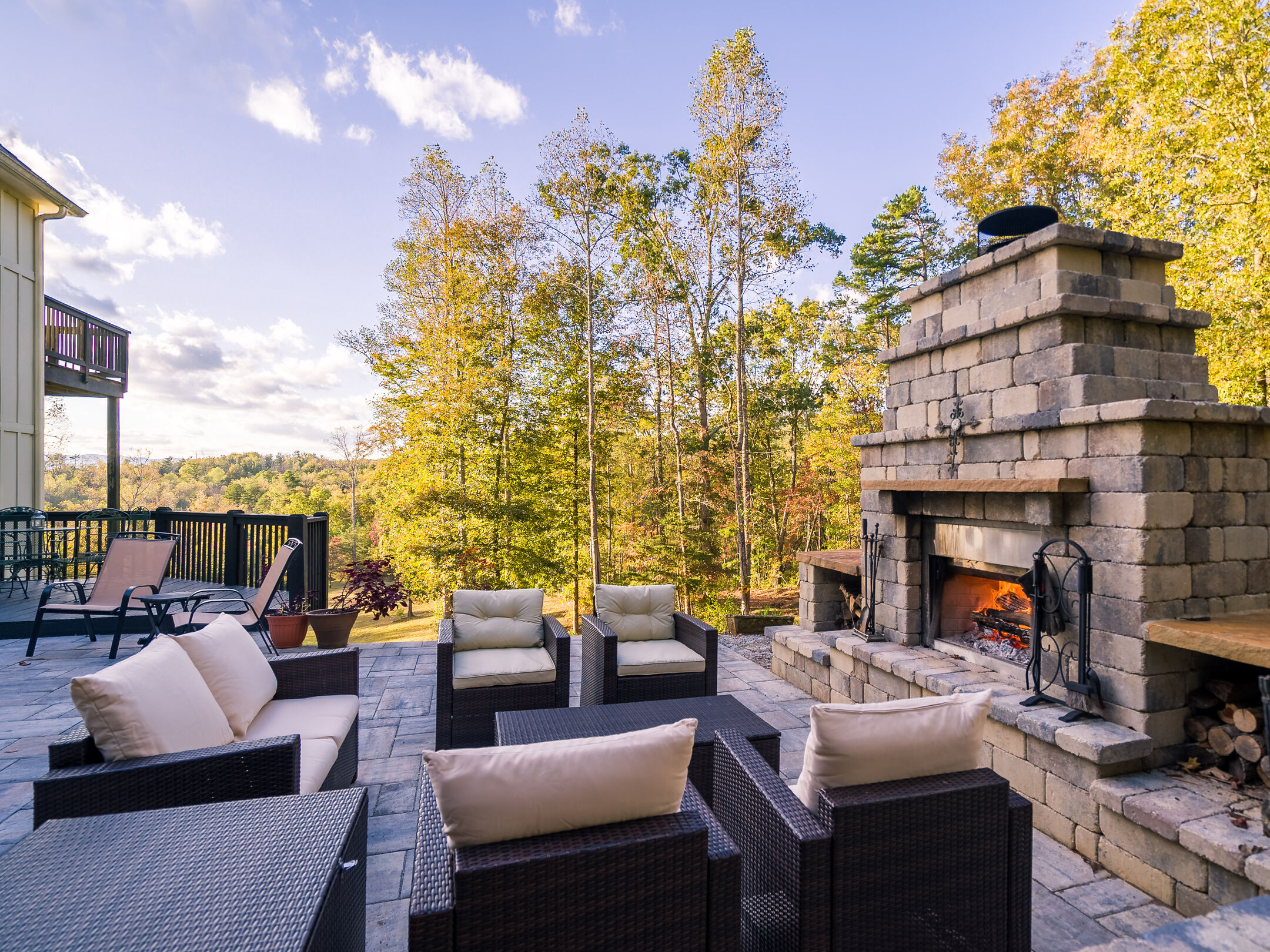
A stone masonry fireplace is the traditional choice for outdoor living. Natural stone, brick, or manufactured stone veneer gives the fireplace a solid, permanent presence, and a tall chimney draws smoke up and away from the seating area. This style suits traditional homes, wooded lots, and any yard where a timeless look is the goal.
Masonry fireplaces are built on a reinforced concrete footing and are best planned by a professional who understands structure, drafting, and local code. Done well, they can last for decades with minimal maintenance.
- Choose stone that complements the colors and materials of your house, such as limestone, fieldstone, or brick
- Plan a footing that extends below the local frost depth to protect against freeze and thaw movement
- Include a proper hearth extension to protect surrounding surfaces from sparks and heat
2. Modern Linear Gas Fireplace
A linear gas fireplace delivers a clean, contemporary look with a long, narrow flame that stretches across a streamlined surround. This design suits modern homes and minimalist patios, and it can be finished in concrete, tile, stucco, or metal panels. Because it runs on gas, it lights with the push of a button and produces no smoke or ash.
This style is popular for people who want a refined look with minimal upkeep. Gas fireplaces still require careful planning for the fuel supply, ventilation, and clearances, so they should be installed by a licensed professional.
- Pair the fireplace with a smooth, noncombustible surround that matches the home’s exterior finish
- Use glass media or ceramic logs to shape the character of the flame
- Plan for a gas line and shutoff valve to be installed and tested according to code
3. Fireplace With Built-In Seating Walls

Integrating low seating walls around the fireplace creates a defined outdoor room. The walls offer a place to sit, hold drinks, and gather, and they help organize the layout so the fire becomes the center of the space. Capped with flat stone or concrete, the walls double as both seating and a design feature.
This idea works well in larger backyards where there is room to create a lounge area. It encourages conversation and gives guests a comfortable place to settle in.
- Set seating height at about 18 inches and depth around 18 to 24 inches for comfort
- Leave safe clearances between seating and the fire according to the manufacturer and local code
- Add cushions or outdoor throws to make the seating more inviting
4. Covered Patio or Pergola Fireplace
A fireplace built into a covered patio or at the end of a pergola extends use into rainy and cool weather. The roof provides shelter, and the fireplace becomes the focal wall of an outdoor room. This approach feels like an extension of the home’s living space and is especially popular for year-round entertaining.
Covered installations demand extra care. Roof materials, ceiling height, ventilation, and clearances to combustible materials all matter, and the fireplace must be approved for use in that setting.
- Confirm with the manufacturer and local code that the fireplace is approved for a covered or partially enclosed space
- Keep adequate clearance to the roof, beams, and any combustible finishes
- Never install a wood-burning fireplace in a fully enclosed porch without proper venting and approval
5. Double-Sided See-Through Fireplace
A see-through fireplace has an opening on both sides, so the fire can be enjoyed from two areas at once. This design is perfect for dividing a space, such as separating a dining area from a lounge, or connecting a deck with a patio. It creates a striking visual feature and makes the fire visible from more angles.
Because both sides are open, drafting and heat distribution need careful design. This style is typically gas-fueled or built with a well-designed masonry structure so smoke and heat behave predictably.
- Plan seating and traffic flow on both sides so each area feels connected but distinct
- Choose a fireplace unit specifically rated for double-sided use
- Use a durable surround that looks good from both directions
6. Fireplace Integrated With an Outdoor Kitchen
Combining a fireplace with a grill, counter, and storage turns the yard into a full outdoor living and dining space. The fireplace provides warmth and ambiance, while the kitchen handles cooking and serving. This layout suits homeowners who entertain often and want everything within easy reach.
Designing the two together helps solve practical issues like smoke direction, spacing, and traffic. The fireplace should sit far enough from cooking equipment that flames, grease, and heat do not interfere with each other.
- Orient the fireplace so prevailing winds do not push smoke toward the cooking area
- Keep the grill and prep counters separate from the fireplace’s heat zone
- Plan electrical outlets, lighting, and gas lines together during design to avoid rework
Safety, Codes, and Planning Before You Build
A beautiful design only works if it is safe and legal. These planning steps should be settled early, before materials are ordered or ground is broken.
Placement and Clearances
Local codes and manufacturer instructions set minimum distances between an outdoor fireplace and your home, fences, trees, overhangs, and property lines. Wind direction, overhead branches, and nearby structures all affect where the fireplace can safely go. For homeowners in Birmingham, MI and surrounding areas, it is wise to check with the local building department before finalizing a location, since requirements vary by municipality.
Permits and Local Regulations
Many communities require permits for masonry fireplaces, gas lines, and electrical work, and some regulate open burning or restrict wood fires on certain days. Confirm what applies to your property before you build, and use licensed professionals for gas and electrical connections.
Gas Line and Electrical Work
A gas fireplace needs a properly sized gas line, a shutoff valve, and pressure testing, and these tasks should be done by a licensed professional. Electrical features such as lighting, ignition systems, and outlets also need to be installed safely and protected from weather.
Smoke, Sparks, and Everyday Safety
Keep a fire extinguisher or water source nearby, never leave a fire unattended, and use a spark screen with wood-burning fireplaces. Keep children and pets at a safe distance, and let ashes cool completely before disposing of them in a metal container.
Choosing a Fuel Type: Wood, Natural Gas, or Propane

The fuel you choose affects cost, convenience, maintenance, and atmosphere. This comparison helps you weigh the main options side by side.
| Feature | Wood-Burning | Natural Gas | Propane |
| Ambiance | Crackle, smell, and traditional feel | Clean, consistent flame | Clean, consistent flame |
| Convenience | Requires firewood and cleanup | Push-button or remote start | Push-button or remote start |
| Smoke and ash | Yes | No | No |
| Fuel supply | Firewood storage | Existing gas line or new line | Portable or fixed tank |
| Installation | Chimney and masonry or prefab firebox | Gas line and professional installation | Tank and professional installation |
| Maintenance | Regular ash removal and chimney care | Annual inspection | Annual inspection and tank checks |
| Local restrictions | May be limited by burn rules | Typically fewer restrictions | Typically fewer restrictions |
Matching the Fuel to Your Lifestyle
Wood is ideal for those who love the traditional experience and do not mind the work. Natural gas suits homeowners who value convenience and already have gas service. Propane offers gas-style convenience where natural gas is not available.
Caring for Your Fireplace Through Michigan’s Seasons
Michigan’s freeze and thaw cycles are hard on outdoor masonry. Seal stone and mortar as recommended, keep water from pooling at the base, and cover the fireplace when it is not in use. Inspect for cracks and loose mortar each spring, and have gas systems checked annually. A little care each year protects the structure and keeps it looking as good as the day it was built.
Bring Your Outdoor Fireplace Plans to Life
A well-designed outdoor fireplace turns a backyard into an extension of your home, one that you will use through three seasons of the year. The eight ideas above show how many directions you can take, from classic stone to sleek gas designs, and the safety and fuel guidance helps make sure the finished project is as dependable as it is beautiful.
When you are ready to plan, Rolls Mechanical serves homeowners throughout Birmingham, MI and surrounding areas with licensed fireplace installation, gas line work, and inspection backed by a focus on safe, code-compliant work. Contact us today to schedule a consultation and start designing an outdoor fireplace that fits your yard and your lifestyle.