A commercial or industrial refrigeration system that runs without regular maintenance is not just inefficient. It is a liability. Product loss, unexpected downtime, and compressor failures do not announce themselves in advance, and they rarely happen at a convenient time. The good news is that most of the problems that take refrigeration systems offline are preventable with a consistent maintenance routine. For facilities that rely on precise temperature control and cold chain integrity to protect their inventory and operations, staying ahead of maintenance is always cheaper than recovering from a failure.
In this guide, you will learn:
- How the refrigeration cycle works and why maintenance keeps it running efficiently
- 8 actionable efficiency tips for commercial refrigeration and industrial equipment
- How compression refrigeration systems differ from other types in their maintenance needs
- What the real cost of deferred maintenance looks like in dollars and downtime
- Which tasks belong on a routine maintenance schedule and which require professional service
What Happens When a Refrigeration System Goes Without Maintenance

Understanding basic refrigeration principles helps explain why each maintenance task matters. Every refrigeration cycle works by moving heat from inside the refrigerated space to the outside environment through a process of heat transfer involving refrigerant changing states from liquid to vapor and back again. Latent heat absorbed during evaporation and released during condensation is what makes the entire process possible. When any component in that cycle is compromised, the whole system loses efficiency.
Without regular attention, components degrade and the risk of a catastrophic failure compounds with every passing month. For commercial and industrial operations in Ann Arbor, MI and surrounding areas, where refrigeration downtime can mean thousands of dollars in lost product within hours, the stakes of skipping maintenance are high.
Here is what deferred maintenance actually costs a compression refrigeration system over time:
- Compressor Failure: The compressor is the most expensive single component in a compression refrigeration system. Dirty coils, low refrigerant, and poor airflow all force the compressor to work beyond its design limits, shortening its service life dramatically and leading to failures that cost several times what routine maintenance would have prevented.
- Rising Energy Consumption: A system with dirty condenser coils, worn door gaskets, or low refrigerant levels can use 20 to 30 percent more energy than a properly maintained unit running the same load. Over the course of a year, that inefficiency adds up to a significant and entirely avoidable operating cost.
- Temperature Inconsistency: As components degrade, the system’s ability to maintain precise setpoints becomes unreliable. For food service, pharmaceutical, and cold storage operations, temperature drift is not just an equipment problem. It is a food safety and compliance issue.
- Accelerated Wear Across All Components: Refrigeration systems are interconnected. When one component works harder to compensate for another that is underperforming, the strain distributes across the whole system, accelerating wear on parts that would otherwise last for years without attention.
- Shortened Equipment Lifespan: A well-maintained commercial refrigeration system can remain in reliable service for 15 to 20 years. Systems that run without regular care often need major repairs or full replacement in half that time, representing an enormous and unnecessary capital expense.
8 Efficiency Tips for Maintaining Your Refrigeration System
Effective maintenance is not a single annual event. It is a layered schedule of daily, monthly, and annual tasks that collectively keep every part of the refrigeration cycle performing the way it was designed to. The following tips cover the full spectrum of what a complete maintenance program looks like for commercial refrigeration and industrial cold rooms alike.
1. Clean Condenser Coils Regularly
Heat transfer is the core function of every refrigeration cycle, and the condenser coil is where that transfer happens on the hot side of the system. When condenser coils are coated in dust, grease, and debris, the heat transfer rate drops, and the compressor compensates by running longer and harder. This increases energy consumption and accelerates wear on every component downstream.
Clean condenser coils every one to three months depending on the operating environment, using a coil brush and a low-pressure rinse. For systems in high-grease environments, a commercial coil cleaner applied before rinsing cuts through buildup that a brush alone cannot remove.
- Check condenser coil cleanliness monthly and document the results
- Ensure adequate clearance around the condenser for proper airflow, typically at least six inches on all sides
- Never use a high-pressure washer on condenser coils, as this bends the fins and permanently reduces airflow
2. Inspect and Clean Evaporator Coils
On the cold side of the refrigeration cycle, the evaporator coil absorbs latent heat from the air inside the refrigerated space as liquid refrigerant evaporates into vapor. Evaporative cooling is the principle at work here, and anything that interferes with airflow across the coil reduces its ability to absorb heat effectively.
Ice buildup on the evaporator coil is one of the most common signs of a system that is overdue for attention, indicating either a defrost cycle malfunction, a refrigerant issue, or restricted airflow. Melting ice that refreezes between defrost cycles is a red flag that should be investigated promptly. Clean evaporator coils at least twice a year and inspect them monthly for frost accumulation that does not clear on schedule.
3. Inspect and Replace the Metering Device as Needed
The metering device, also called the expansion valve or orifice, controls the flow of refrigerant into the evaporator coil and is a critical point of regulation in the refrigeration cycle. A metering device that is stuck open, stuck closed, or drifting from its calibrated setting causes incorrect refrigerant flow that affects superheat, suction pressure, and ultimately the system’s ability to maintain temperature.
Symptoms of a failing metering device include erratic suction pressure, inconsistent temperatures in the refrigerated space, and compressor short-cycling. This component requires a licensed technician to inspect and replace, and it should be evaluated at every annual maintenance visit rather than only when symptoms appear.
- Ask your technician to check superheat and subcooling readings, as these values directly reflect metering device performance
- Thermostatic expansion valves should be checked for proper bulb contact and sensing accuracy during each service visit
- Electronic expansion valves require both mechanical and controls-level diagnostics to evaluate properly
4. Verify Refrigerant Levels and Check for Leaks

A compression refrigeration system that is low on refrigerant is operating at a fraction of its designed efficiency and placing significant stress on the compressor. Refrigerant does not get consumed during normal operation, so any loss indicates a leak that must be located and repaired before refrigerant is recharged.
Signs of low refrigerant include longer run times, higher-than-normal discharge temperatures, ice on the suction line, and reduced cooling capacity in cold rooms and refrigerated cases. For facilities in Ann Arbor, MI and surrounding areas operating large-scale cold storage or industrial refrigeration equipment, even a small refrigerant leak can translate into significant efficiency losses and safety concerns, particularly in ammonia systems.
Refrigerant handling requires EPA Section 608 certification, so this step must always be performed by a licensed technician. Schedule a refrigerant check at least once per year as part of a professional maintenance visit.
5. Test and Service the Defrost System
Most commercial refrigeration systems rely on a defrost cycle to remove ice that accumulates on the evaporator coil during normal operation. Melting ice through a controlled defrost process is essential for maintaining proper airflow across the coil and sustaining efficient heat transfer throughout the refrigeration cycle.
When defrost heaters, termination thermostats, or defrost timers malfunction, ice accumulates progressively until the system can no longer maintain temperature. Test the defrost cycle monthly by manually initiating a sequence and confirming that the heaters activate, the coil clears, and the system returns to normal cooling within the expected timeframe.
- Document defrost cycle timing and note any changes in duration, as longer cycles often signal developing coil or heater issues
- Check the condensate drain pan and drain line during each defrost inspection to confirm water is draining freely
- Upgrading older time-initiated defrost systems to demand-initiated controls reduces energy use and extends coil life
6. Monitor and Log Operating Temperatures and Pressures
One of the most underutilized maintenance practices for any compression refrigeration system is consistent monitoring and logging of operating temperatures and pressures. When you have a baseline record of normal operating parameters, deviations stand out immediately and can be investigated before they become failures.
Install digital temperature monitoring with remote alerts on critical cold rooms and refrigerated spaces so abnormal conditions trigger a notification rather than being discovered during the next physical inspection. For facilities in Ann Arbor, MI and surrounding areas where temperature excursions carry regulatory or product liability implications, continuous monitoring is a standard best practice rather than an optional upgrade.
- Log suction and discharge pressures, saturated temperatures, and superheat readings at each professional service visit
- Compare current readings to baseline values established during commissioning or the last major service
- Any trend that changes across multiple service visits warrants investigation, even if current readings are still within acceptable range
7. Inspect Electrical Components and Connections
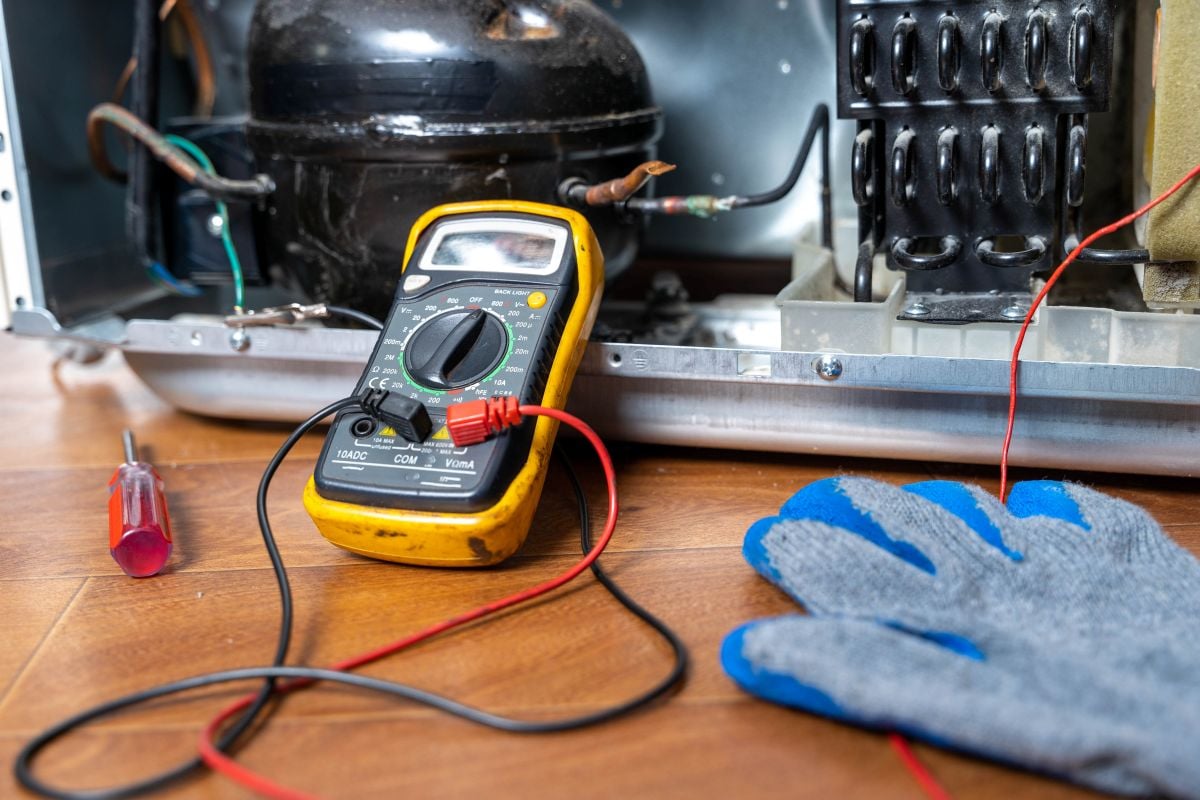
Electrical failures are among the most common non-refrigerant causes of commercial refrigeration breakdowns. Loose terminal connections generate heat and resistance, contactors and relays wear out with cycling, and capacitors lose their ability to start and run motors efficiently over time.
Have a technician check all electrical connections, measure motor amp draws against nameplate ratings, test capacitors, and inspect the control board for signs of heat damage or corrosion at every annual service visit. Catching a failing contactor during a planned maintenance visit costs a fraction of the emergency service call and product loss that follows an unplanned failure.
- Keep the electrical panel and control box clean and free of dust and moisture
- Document motor amp draws at each service visit and watch for upward trends that indicate increasing mechanical resistance
- Replace capacitors showing any signs of bulging, leaking, or reduced capacitance during testing
8. Schedule Annual Professional Preventive Maintenance
Daily and monthly tasks performed by in-house staff are valuable, but they do not substitute for annual service by a licensed technician who can perform full system diagnostics, handle refrigerants, evaluate metering device performance, and identify developing issues that are not visible without proper instruments.
For operations running multiple commercial refrigeration units and cold rooms, a scheduled maintenance agreement ensures every system receives consistent attention on a documented timeline. These records also satisfy the documentation requirements that equipment warranties and health department inspections routinely require.
Maintenance by Refrigeration System Type

Not every system shares the same maintenance profile. Whether you are operating a basic refrigeration setup in a small commercial kitchen or a complex compression refrigeration system serving an industrial distribution center, matching the maintenance schedule to the actual equipment type produces better outcomes than a generic approach.
Compression Refrigeration Systems
The compression refrigeration system is the most common type in commercial and industrial use. It relies on a mechanical compressor to circulate refrigerant through the refrigeration cycle, and its maintenance needs center on the compressor, condenser, metering device, and evaporator coil. Condenser coil cleaning, refrigerant checks, metering device evaluation, and electrical component inspections are the core of any compression refrigeration maintenance program.
Air conditioning systems used in commercial buildings operate on the same compression refrigeration principles as refrigeration equipment and share many of the same maintenance requirements, including coil cleaning, refrigerant checks, and electrical inspections on a similar schedule.
Absorption Refrigeration Systems
Absorption refrigeration differs fundamentally from compression refrigeration in that it uses a heat source rather than a mechanical compressor to drive the refrigeration cycle. These systems are less common in commercial settings but are used in specific industrial applications where waste heat is available. Maintenance for absorption refrigeration systems focuses on the generator, absorber, heat exchanger, and solution pump, and requires technicians with specific training in this less common system type.
Cold Rooms and Walk-In Units
Cold rooms and walk-in coolers and freezers see heavy traffic and are particularly susceptible to gasket wear, door closer failure, and condensate drain issues. Monthly gasket inspections, weekly floor drain checks, and quarterly coil cleaning are the foundation of a solid walk-in maintenance program. Freezer units require additional attention to the defrost system because melting ice that refreezes around the coil or drain pan creates problems that compound quickly.
Evaporative Cooling and Hybrid Systems
Some commercial facilities use evaporative cooling systems as a supplemental or standalone cooling method, particularly in dry climates or for pre-cooling applications. Maintenance for evaporative cooling equipment focuses on pad condition, water distribution systems, fan motors, and water quality management to prevent mineral scale and biological growth that reduce efficiency over time.
The Real Cost of Skipping Maintenance
The financial case for consistent refrigeration maintenance is straightforward when you compare planned maintenance costs against the cost of a single preventable failure. A compressor replacement on a commercial unit runs anywhere from $600 to $2,500 in parts alone, before labor and product loss are factored in. A failed condenser unit on a walk-in freezer can run $3,000 to $8,000 or more. An emergency service call on a weekend or holiday adds a premium rate on top of those repair costs.
When you factor in product loss, regulatory risk from temperature excursions in cold rooms, and emergency labor premiums, a single preventable failure almost always costs more than years of consistent planned maintenance. For operations throughout Ann Arbor, MI and surrounding areas running multiple commercial refrigeration systems, the math strongly favors treating maintenance as an operational priority rather than a discretionary expense. A formal maintenance agreement that covers scheduled visits, documentation, and priority emergency response converts unpredictable failure costs into a manageable, budgetable line item.
Keep Your System Running the Right Way
A well-maintained compression refrigeration system runs more efficiently, lasts longer, and fails far less often than one that only receives attention when something goes wrong. The eight tips above give you a practical framework for building a maintenance program that protects your equipment, your inventory, and your operation, whether you are managing a single walk-in cooler or a network of industrial cold rooms.
The details matter, and so does having the right team behind the work. From metering device evaluations and refrigerant service to full refrigeration cycle diagnostics and ammonia refrigeration compliance, Rolls Mechanical brings the expertise and equipment to keep every type of commercial refrigeration system performing at its best. Contact us today to schedule a professional maintenance visit and make sure your system is ready for whatever the season brings.