
Most property owners never think about backflow prevention until a regulatory inspection, a building permit, or a plumbing problem forces the conversation. Understanding how a double check valve works, where it is required, and what its installation involves puts you in a far better position to make informed decisions about your plumbing system and stay ahead of compliance requirements. The same principle of ensuring water flows safely in one direction is central to how properly maintained plumbing systems protect both individual properties and the broader water supply, and a double check valve assembly is one of the most common devices used to achieve that protection.
In this guide, you will learn:
- What a double check valve is and how it physically works
- Where double check valve assemblies are required by code
- What a proper installation involves from start to finish
- How a double check valve compares to other backflow prevention devices
- How to maintain and test the assembly to keep it compliant and functional
Why Double Check Valves Matter More Than Most People Realize

A double check valve assembly is not just a regulatory checkbox. It is a mechanical device that stands between your potable water supply and potential contamination from a downstream cross-connection. Without it, a drop in supply pressure, a pump activation, or a thermal expansion event in the downstream system can create a pressure differential that draws contaminated water back into the main, affecting not just your property but potentially a wider section of the distribution system.
For commercial property owners, facility managers, and homeowners with irrigation systems or fire suppression connections in Flint, MI and surrounding areas, understanding what this device does and why it is there clarifies why annual testing requirements exist and why compliance is not optional for regulated connections.
- Cross-Connection Protection: Any point where a potable water supply connects to a non-potable source, including irrigation systems, boiler feed lines, car wash equipment, and beverage dispensing systems, is a cross-connection. A double check valve assembly prevents contamination at these connection points under both backpressure and backsiphonage conditions.
- Code Compliance: Most municipalities require testable backflow prevention devices on commercial irrigation connections, fire suppression system supplies, and other designated cross-connections. A properly installed and annually tested double check valve assembly satisfies this requirement for low-to-medium hazard applications.
- Insurance and Liability Protection: A water contamination event traced to an unprotected or non-functional backflow device on your property creates significant liability exposure. A documented, tested assembly demonstrates that reasonable precautions were in place.
- Regulatory Continuity: Many water authorities require documentation of annual testing to maintain water service eligibility for commercial properties. Falling out of compliance can result in notices, fines, and in some cases service interruption.
- System Longevity: Beyond regulatory compliance, a functional double check valve assembly protects fixtures, appliances, and equipment on the protected side of the connection from backflow events that can introduce sediment, chemicals, or biological material into the system.
5-Step Breakdown: How a Double Check Valve Functions
The name double check valve describes the device’s core mechanism: two independently operating check valves in series, each providing a barrier against reverse flow. Understanding what each component does and how they interact explains both the device’s protection value and why it requires professional installation and periodic testing.
1. The First Check Valve: Primary Backflow Barrier
The first check valve is the downstream-facing barrier that a reverse flow event encounters first. It consists of a spring-loaded disc or clapper that presses against a rubber seat under normal forward flow conditions, sealing the valve when pressure in the downstream system equals or exceeds the upstream pressure.
Under forward flow, water pressure from the supply line overcomes the spring tension and pushes the disc open, allowing water to pass through. When flow stops or upstream pressure drops below downstream pressure, the spring snaps the disc back against its seat, creating a physical barrier against reverse flow. The first check valve is the primary line of defense in the assembly, and its condition is the first thing a certified tester evaluates during an annual inspection.
- The cracking pressure of the first check valve, which is the minimum upstream pressure differential required to open it, is a measured value during testing
- A first check valve that holds less than 1.0 PSI differential is considered a failing valve requiring repair or replacement
- Debris, scale, or a worn seat that prevents the disc from sealing completely is the most common failure mode for first check valves
2. The Second Check Valve: Redundant Protection
The second check valve is positioned downstream of the first and operates on the same spring-and-disc principle. Its function is redundant protection: if the first check valve fails to seat completely due to debris, wear, or damage, the second check valve provides an independent backup barrier against reverse flow reaching the supply main.
The regulatory requirement for two check valves in series rather than one reflects the recognition that any single mechanical component can fail. A double check valve assembly designed to code cannot fail to protect against backflow unless both check valves fail simultaneously, which is a significantly lower probability event than either one failing alone.
- The second check valve must also meet the minimum 1.0 PSI differential holding requirement during annual testing
- Both check valves are tested independently, and failure of either one constitutes a failing test result for the assembly
- The second check valve is less exposed to debris and thermal cycling than the first, and tends to maintain its condition longer under most operating conditions
3. The Test Cocks: Diagnostic Access Points
A properly configured double check valve assembly includes four test cocks, also called test ports, positioned at specific locations relative to the check valves and the shutoff valves at each end of the assembly. These test cocks are the access points through which a certified tester connects differential pressure gauges to measure the pressure differential across each check valve and confirm that both are holding against reverse flow.
Without test cocks, the check valves could not be tested in place without disassembling the assembly, which would require shutting down the downstream system entirely for every inspection. The test cocks allow the annual certification test to be completed in 15 to 30 minutes without interrupting service.
- Test cocks must be accessible and functional, with plugs or caps in place when not in use to prevent unauthorized tampering
- A test cock that is corroded, stuck, or missing its plug is a code deficiency that a certified tester will note in the inspection report
- Test cock positions are standardized by model and must be installed in the correct orientation for the tester’s gauge fittings to engage properly
4. The Shutoff Valves: Isolation for Service and Testing

A complete double check valve assembly includes a shutoff valve immediately upstream and immediately downstream of the assembly body. These shutoff valves serve two purposes: they allow the assembly to be isolated from both the supply and the downstream system for testing, repair, or replacement, and they allow service to be performed without shutting down the main supply to the facility.
For commercial properties in Flint, MI and surrounding areas with irrigation systems, fire suppression connections, or other seasonal backflow prevention applications, functional shutoff valves on both sides of the assembly are essential for proper winterization and spring startup procedures.
- Shutoff valves that do not close completely, or that close partially due to wear or corrosion, must be repaired or replaced before the assembly can be tested properly
- Ball valves are the most common and most reliable shutoff valve type for backflow prevention assemblies in most applications
- The upstream shutoff valve position (open or closed) affects the upstream pressure available to the assembly during testing and must be fully open during the test procedure
5. The Complete Assembly: How All Components Work Together
In normal operation, the double check valve assembly sits in the supply line with both check valves held open by forward flow pressure from the supply. Water flows freely from the supply through the assembly and into the downstream system. The spring tension in each check valve disc is calibrated low enough that normal supply pressure easily overcomes it.
When forward flow stops, both discs snap closed under spring pressure, creating two independent seals against reverse flow. If a backpressure event occurs in the downstream system, the downstream pressure pushing against the second check valve disc must overcome the spring tension and the upstream supply pressure to open the valve. Under a backsiphonage condition, where upstream pressure drops below atmospheric, both check valves remain closed by their springs regardless of the downstream pressure condition, preventing siphoning from the downstream system back into the supply.
Installation Requirements for a Double Check Valve Assembly
A double check valve assembly installation involves more than connecting a device to the supply line. Proper installation requires attention to location, orientation, clearances, and code-specific requirements that vary by municipality and application.
Location and Height Requirements
Most codes require the assembly to be installed in an accessible location that allows a tester to set up differential pressure gauges on all four test cocks simultaneously. The assembly must be located upstream of any non-potable connection it is protecting and downstream of the meter or property line shutoff. Indoor installation is generally preferable to outdoor installation in Michigan’s climate, as freeze protection for a backflow assembly adds complexity and cost.
For outdoor installations in Flint, MI and surrounding areas where the assembly serves a seasonal irrigation system, the installation must include a plan for winterization that prevents freeze damage to the check valve discs, seats, and body.
Orientation and Pipe Support
Most double check valve assemblies are approved for installation in horizontal, vertical, or angled orientations, but the approved orientations vary by model and must be confirmed against the manufacturer’s installation instructions. Installing a horizontal-only assembly in a vertical orientation voids the manufacturer certification and may cause improper spring function in the check valves.
Proper pipe support is also required to prevent mechanical stress on the assembly body from the weight of the connected pipe, which can cause joint leaks and accelerate wear on the internal components over time.
Permits and Licensed Installation
Double check valve assembly installations on regulated connections require permits in most jurisdictions, and the installation must be performed by or under the supervision of a licensed plumber. Following installation, the assembly must be tested by a certified backflow tester and the results filed with the local water authority before the installation is considered code-compliant and complete.
Double Check Valve vs. Other Backflow Prevention Devices

A double check valve assembly is one of several backflow prevention device types, and understanding how it compares to alternatives clarifies when it is the appropriate choice and when a different device is required.
Double Check Valve vs. Reduced Pressure Zone Assembly (RPZ)
The RPZ assembly provides a higher level of backflow protection than a double check valve. It adds a relief valve between the two check valves that discharges water to atmosphere if the differential pressure between the valves drops below the design minimum, providing a physical break in the water column that makes it impossible for backflow to reach the supply. RPZ assemblies are required for high-hazard cross-connections where contamination of the supply would create a health risk.
A double check valve assembly is appropriate for low-to-moderate hazard applications where the potential contaminant is not considered a health hazard, such as connections to fire suppression systems, boiler feed lines using non-toxic treatment chemicals, and irrigation systems that do not use chemical injection.
Double Check Valve vs. Pressure Vacuum Breaker (PVB)
A pressure vacuum breaker is a simpler, less expensive device that protects against backsiphonage only. It cannot protect against backpressure conditions, which makes it inappropriate for any application where the downstream system can develop pressure equal to or greater than the supply pressure. A double check valve assembly protects against both backpressure and backsiphonage, making it applicable to a wider range of cross-connection types.
Most municipal codes specify which device type is required for each application type, and substituting a lower-protection device for a required higher-protection device is a code violation that will result in a failed inspection.
Protect Your Water Supply With a Properly Installed Assembly
A double check valve assembly is a straightforward device that does a specific and important job: it keeps water in your supply lines moving in the direction it is supposed to move, and it provides redundant protection against the failure of any single mechanical component in the system. Understanding how it works, where it belongs, and what its installation requires puts you in a position to make informed decisions about cross-connection protection on your property and to evaluate contractor proposals and inspection reports with confidence.
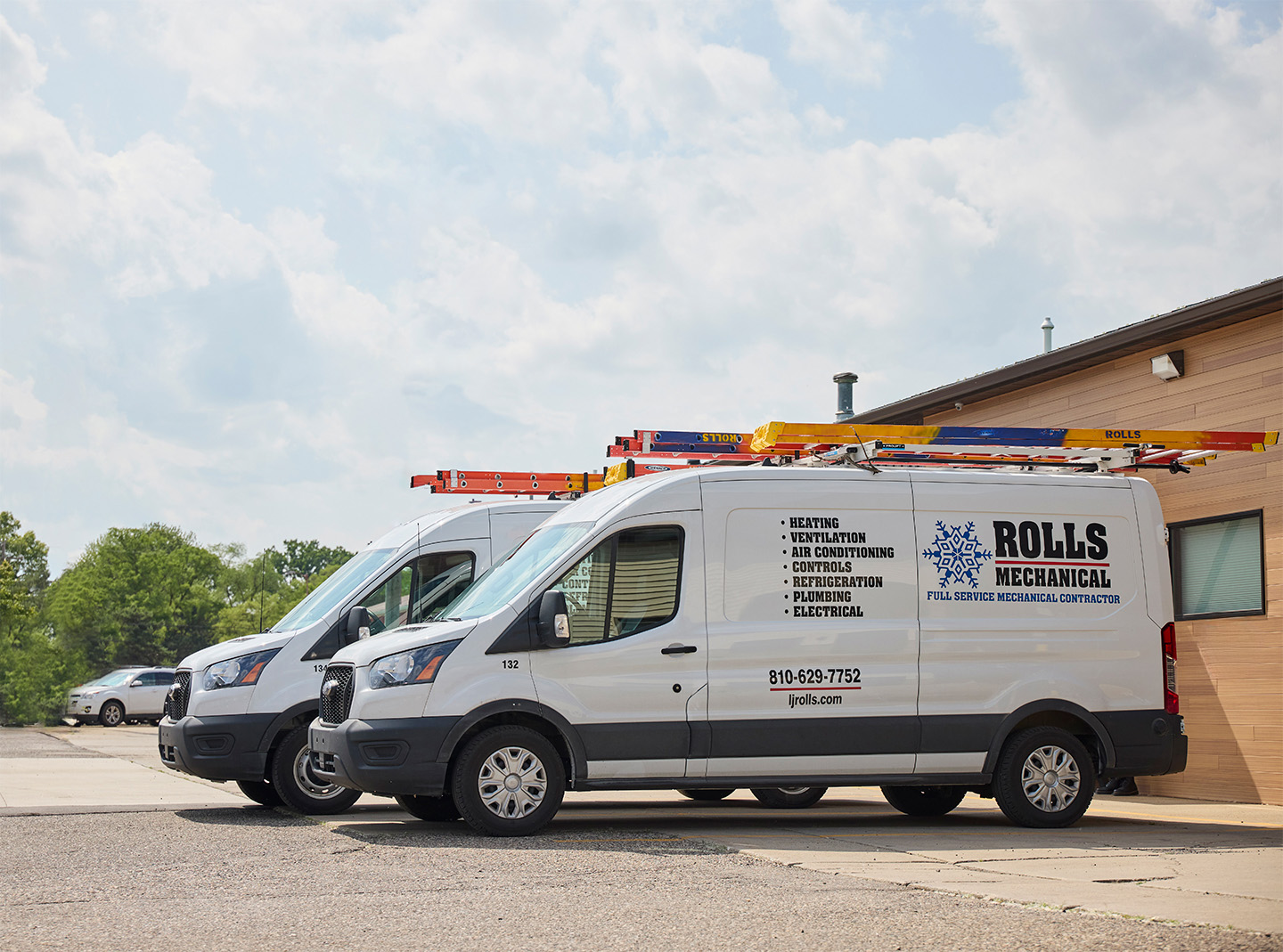
When it is time to install a new double check valve assembly, replace an aging one, or get a failing assembly repaired and tested back into compliance, Rolls Mechanical serves commercial and residential property owners throughout Flint, MI and surrounding areas with licensed installation, certified backflow testing, and the documentation that regulators require. Contact us today to schedule a backflow prevention assessment and make sure your assembly is installed correctly, tested, and fully compliant with local requirements.