
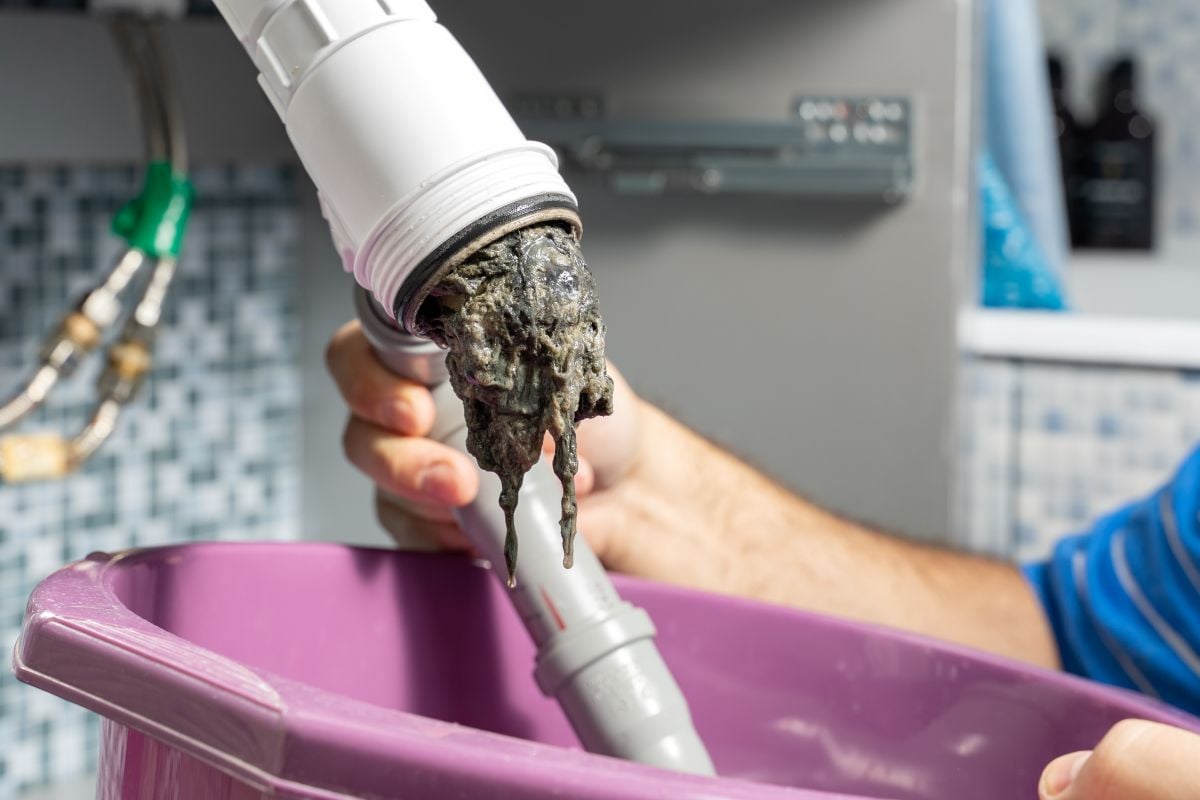
A slow drain is annoying. A clogged drain deep in pipe walls is a different problem entirely, one that store-bought solutions rarely reach and that worsens with every day it goes untreated. Deep clogs trap waste, accelerate corrosion, and put real stress on the plumbing throughout your home. If you have already noticed that your pipes and drains are not moving water the way they should, the blockage is likely further down the line than most homeowners expect, and getting to it requires a more deliberate approach.
In this guide, you will learn:
- What causes deep pipe clogs and why they are harder to clear than surface blockages
- 7 solutions ranked from easiest to most effective
- When DIY methods stop being enough and professional help becomes necessary
- How to prevent deep clogs from coming back after you clear them
- What signs indicate a more serious pipe problem beneath the clog itself
What Actually Causes a Clogged Drain Deep in Pipe Systems

Surface clogs are usually made of obvious culprits: a wad of hair sitting just below the drain cover or a buildup of soap scum near the top of the trap. Deep clogs are more complicated because they form gradually over months or years from materials that pass the trap and accumulate further down the line where water velocity slows.
Understanding what causes deep clogs is the first step toward clearing them effectively and preventing them from returning.
- Grease and Fat Accumulation: Cooking oils, fats, and grease coat the inside of pipes and cool as they travel, gradually narrowing the pipe diameter until flow stops almost entirely. This is one of the most common causes of deep kitchen drain clogs in homes across Livonia, MI and surrounding areas.
- Soap Scum and Mineral Deposits: Bar soap leaves behind a sticky residue that combines with hard water minerals to form a concrete-like buildup on pipe walls over time, particularly in bathroom drains.
- Tree Root Intrusion: Older homes with clay or cast iron sewer lines are vulnerable to root intrusion, where tree roots grow through small cracks and expand inside the pipe until flow is restricted or fully blocked.
- Foreign Objects: Items that should never go down a drain, including wipes labeled as flushable, cotton balls, and food scraps, travel past the trap and lodge at bends and joints deep in the line.
- Collapsed or Corroded Pipe Sections: In older plumbing, pipe walls can corrode, sag, or partially collapse, creating a low point where debris catches and accumulates into a blockage that no amount of liquid cleaner will dissolve.
7 Solutions for a Clogged Drain Deep in Pipe Walls
Not every solution works for every type of clog, and starting with the least invasive option makes sense before moving to methods that require more equipment or professional involvement. Work through these in order and stop when the clog clears, then follow up with a preventive maintenance flush to keep the line clear.
1. Boiling Water Flush
Boiling water is the simplest first step for grease-based clogs that have not fully hardened yet. Pouring a full kettle slowly and directly down the drain allows the heat to soften and partially dissolve the grease coating the pipe walls. This method works best on metal pipes and should not be used on PVC, which can warp or loosen joints under extreme heat.
Pour the water in two or three stages, allowing 30 seconds between each pour so the hot water has time to work before more water pushes it further down the line.
2. Baking Soda and Vinegar Followed by Hot Water
For clogs that boiling water alone cannot shift, the combination of baking soda and white vinegar creates a fizzing reaction that can break up organic matter clinging to pipe walls. Pour one cup of baking soda down the drain first, follow it with one cup of white vinegar, and cover the drain opening to force the reaction downward rather than back up into the sink.
Wait 20 to 30 minutes and then flush with the hottest tap water available. This method is safe for all pipe types and is particularly effective on soap scum and organic buildup.
- Repeat the process twice if the drain is still slow after the first attempt
- Avoid mixing this method with chemical drain cleaners, as the combination can produce hazardous fumes
- This approach works best as a maintenance flush rather than a solution for a fully blocked drain
3. Drain Snake or Hand Auger

When water-based methods do not reach the clog, a drain snake, also called a hand auger, gives you physical reach into the pipe. A standard hand auger extends 15 to 25 feet and is capable of reaching most clogs that form beyond the trap. Feed the cable into the drain slowly, rotating the handle as you push, until you feel resistance.
Once you locate the clog, continue rotating to either break it apart or hook it so you can pull it back out. For homeowners in Livonia, MI and surrounding areas dealing with recurring slow drains in older homes, a hand auger is one of the most cost-effective tools to have on hand for regular maintenance.
- Use a drain snake sized appropriately for the pipe diameter, typically 1/4-inch cable for sinks and 1/2-inch for toilets and larger lines
- Pull the cable out slowly and wipe it clean between passes to avoid redistributing debris
- If the snake meets resistance immediately, check the trap before assuming the clog is deeper
4. Enzyme Drain Cleaners
Unlike chemical drain cleaners, enzyme-based products use biological cultures to digest the organic material making up the clog. They work slowly, often requiring 6 to 8 hours or overnight to produce results, but they are safe for all pipe types, do not generate heat, and will not damage seals or corrode older pipes the way caustic chemical cleaners can.
Enzyme cleaners are best used on clogs composed primarily of organic matter, including grease, soap, hair, and food debris. They are less effective on mineral deposits or foreign objects and should not be expected to clear a fully blocked pipe on their own.
5. Wet-Dry Vacuum
A wet-dry shop vacuum can generate enough suction to pull a clogged drain deep in pipe toward the opening rather than pushing it further down the line, which is the risk with pressurized methods. Create a tight seal around the drain opening with a rag or the vacuum’s accessories and run the vacuum on its highest wet setting for 30 to 60 seconds.
This method is particularly effective for clogs near accessible cleanout points and for foreign objects that have lodged just beyond the trap. It requires no chemicals and causes no damage to pipe materials.
6. Hydro Jetting
Hydro jetting uses a high-pressure stream of water delivered through a specialized hose and nozzle to scour the interior walls of the pipe and blast clogs apart. Unlike a drain snake, which punches a hole through the clog, hydro jetting removes the entire buildup from the pipe wall, including grease deposits, mineral scale, and accumulated debris.
This method requires professional equipment and should be performed by a licensed plumber who can first inspect the pipe condition with a camera to confirm the pipe can withstand the pressure. For homeowners in Livonia, MI and surrounding areas with chronic deep clogs or older pipe systems, hydro jetting often solves in a single visit what repeated DIY attempts have failed to clear.
- Hydro jetting is particularly effective on grease-heavy kitchen drain lines
- Water pressure typically ranges from 1,500 to 4,000 PSI depending on pipe diameter and clog severity
- The process also clears away root intrusion in sewer lines when combined with a mechanical cutter
7. Professional Drain Camera Inspection and Targeted Clearing
When none of the above methods resolve the blockage, or when the same drain clogs repeatedly despite clearing, the problem may be structural rather than simply material. A plumbing camera inspection threads a small camera through the drain line to identify exactly what is causing the blockage and where it is located.
This matters because collapsed pipe sections, offset joints, and significant root intrusion require targeted repairs, not just clearing. A camera inspection eliminates guesswork and ensures that any repair work addresses the actual problem rather than the symptom. For homes in Livonia, MI and surrounding areas built more than 30 years ago, a camera inspection is often the most efficient first step when dealing with a stubborn clogged drain deep in pipe systems that have never been professionally inspected.
When DIY Methods Are Not Enough

There is a point with every deep clog where continuing to apply household solutions stops being productive and starts creating new risks. Knowing when to stop and call a professional protects your pipes and prevents a manageable clog from becoming a plumbing emergency.
Signs That a Professional Is Needed
- Multiple Drains Backing Up at Once: When more than one drain in the home is slow or backing up simultaneously, the clog is almost certainly in the main sewer line rather than an individual branch line. This is not a situation that a hand auger or enzyme cleaner can address.
- Sewage Odor Coming From Drains: A persistent sewage smell rising from drains suggests that waste is being held somewhere in the line rather than moving through to the municipal sewer. This warrants immediate professional attention.
- Gurgling Sounds in Unrelated Fixtures: If flushing a toilet causes gurgling in a nearby sink, or running the washing machine creates bubbles in the bathtub drain, the venting system or main sewer line is likely involved in the blockage.
- Water Backing Up Into Other Fixtures: Water appearing in a shower or tub when a sink or toilet is used is one of the clearest signs that the blockage is in the main line and that professional clearing is necessary.
- Repeated Clogs in the Same Drain: A drain that clogs every few weeks despite clearing suggests either a structural problem in the pipe or a buildup pattern that requires a more thorough mechanical cleaning than DIY tools can provide.
How to Keep Deep Clogs From Coming Back
Clearing a clogged drain deep in pipe systems is only half the job. Without changes to what goes down the drain and how the system is maintained, the same blockage will rebuild in the same location. Prevention is far less expensive and disruptive than repeated clearing.
Best Practices for Drain Maintenance
- Use Drain Screens: Fine mesh screens in sink, shower, and tub drains catch hair, soap particles, and food debris before they enter the pipe. Empty and clean them weekly.
- Never Pour Grease Down the Drain: Collect cooking grease in a container and dispose of it in the trash. Even grease rinsed with hot water will cool and solidify further down the line.
- Flush Drains Monthly: Running very hot water down each drain for two to three minutes once a month helps clear minor buildup before it accumulates into a blockage.
- Skip Wipes, Even Flushable Ones: No wipe breaks down in a pipe the way toilet paper does. Even products labeled flushable are a leading cause of deep sewer line clogs and should always go in the trash.
- Schedule Periodic Professional Maintenance: For older homes or properties with known pipe issues, a professional cleaning every one to two years keeps the line clear and gives a technician the opportunity to spot developing problems before they become emergencies.
Get Your Drain Cleared the Right Way
A clogged drain deep in pipe walls is not a problem that gets better with time, and the longer it sits, the more damage it does to the pipe itself and the harder it becomes to clear without professional intervention. The seven solutions above cover the full range of what is possible from the simplest home remedy to professional-grade hydro jetting and camera inspection, giving you a clear path forward regardless of how serious the blockage turns out to be.
Whether you are dealing with a kitchen drain that has been running slow for months, a bathroom line that clogs every few weeks, or a main sewer line that is showing all the signs of a serious blockage, the right solution exists and Rolls Mechanical has the tools and experience to apply it. Homeowners and property managers throughout Livonia, MI and surrounding areas trust us to get it right the first time without the guesswork. Contact us today and let us clear it for good.