Summer in Michigan hits hard, and the last thing any homeowner or facility manager wants is an air conditioning system that gives out in the middle of July. Staying ahead of that risk starts with routine ac maintenance, a practice that protects your investment, keeps energy bills in check, and extends the life of your equipment. If you want to understand how your indoor air quality and system performance connect, that relationship matters more than most people realize.
In this guide, you will learn:
- Why skipping maintenance leads to costly breakdowns
- The 7 most important steps in a complete AC maintenance checklist
- When to handle tasks yourself and when to call a professional
- How seasonal timing affects your system’s performance
- What warning signs to watch for between service visits
Why AC Maintenance Is the Most Valuable Investment You Can Make in Your System

Most HVAC equipment fails not because of bad luck but because of neglect. An air conditioning system that receives consistent, professional attention simply performs better, lasts longer, and costs less to operate over time. For homeowners and property managers in Bloomfield Hills, MI and surrounding areas, where summer humidity and heat can push systems to their limits for months at a time, skipping maintenance is a gamble that rarely pays off.
Here is why making maintenance a priority changes everything:
- Longer Equipment Life: AC systems that receive regular service routinely outlast neglected ones by several years, delaying the cost of full replacement.
- Lower Energy Bills: A clean, properly calibrated system runs more efficiently, using less energy to cool the same space and reducing monthly utility costs noticeably.
- Fewer Emergency Repairs: Most breakdowns are preventable. Routine maintenance catches small issues before they become expensive failures in the middle of peak season.
- Better Air Quality: A well-maintained system circulates cleaner air through your home or facility, reducing dust, allergens, and humidity-related problems that build up over time.
- Warranty Protection: Many manufacturers require documented professional maintenance to keep equipment warranties valid, a detail that matters significantly when something eventually goes wrong.
The 6-Step AC Maintenance Checklist Every Homeowner and Facility Manager Needs
A complete ac maintenance routine is not just about swapping out a filter once a year. It involves a coordinated set of tasks that address every component of your system, from the outdoor condenser to the indoor air handler. Work through each of these steps annually, ideally before cooling season begins, to keep your system operating at full capacity all summer long.
1. Replace or Clean the Air Filter
The air filter is the first line of defense for your system and your indoor air quality. A clogged filter restricts airflow, forcing your AC to work harder than it should, which raises energy costs and accelerates wear on the blower motor and other critical components. Standard one-inch filters should be replaced every one to three months, depending on household conditions. Thicker media filters may last longer but still need to be checked regularly.
- Check the filter monthly during peak cooling season
- Replace immediately if it appears gray, clogged, or visibly dirty
- Upgrade to a higher MERV-rated filter if allergies or indoor air quality are a concern
2. Clean the Condenser Coils
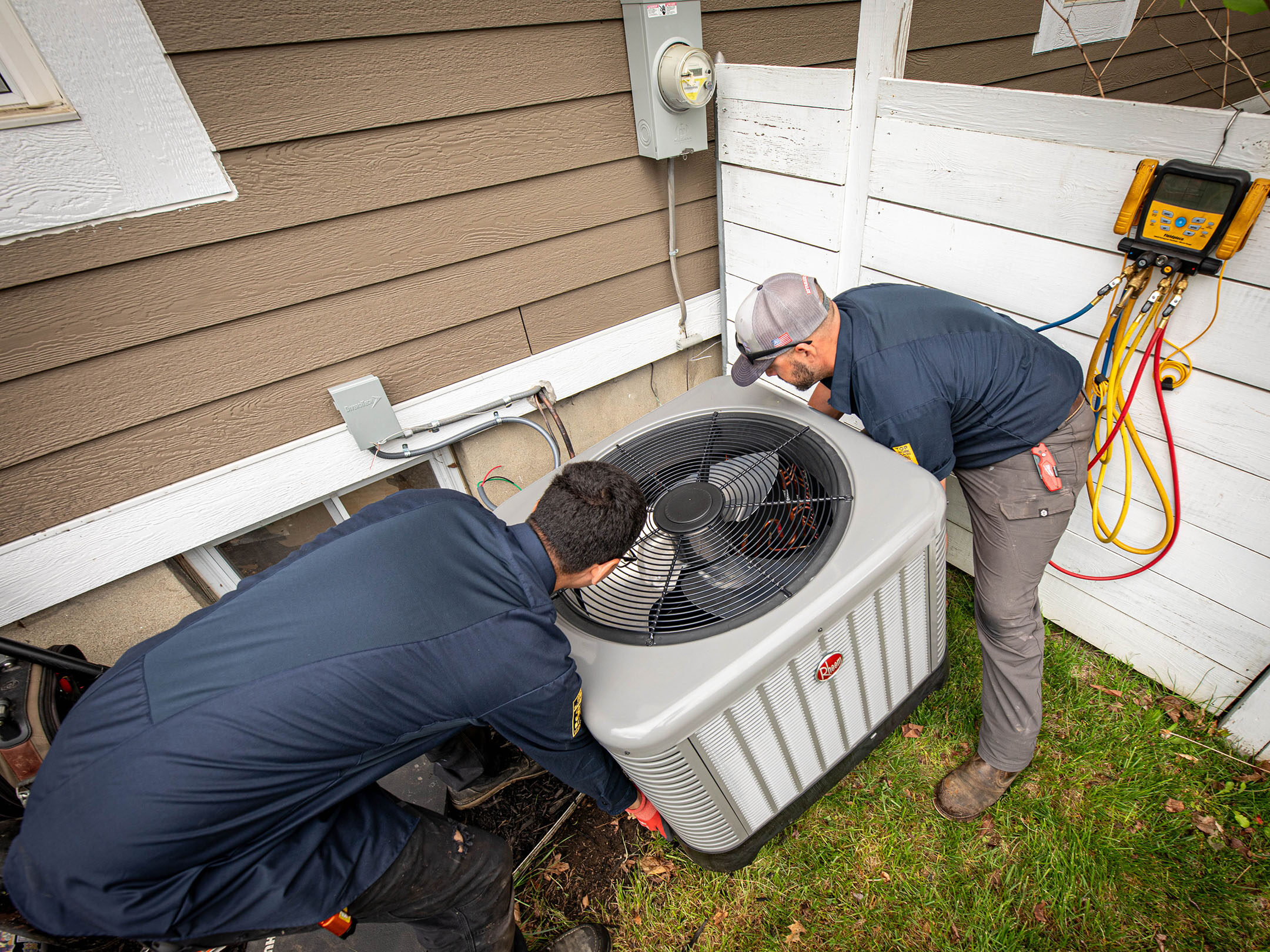
The outdoor condenser unit releases heat from inside your home to the outside air. Over time, dirt, grass clippings, leaves, and debris accumulate on the condenser coils, reducing their ability to transfer heat effectively. This forces the compressor to work overtime, increasing energy use and putting the entire system at risk of overheating.
Turn off power to the unit before cleaning. Use a gentle stream of water to rinse the coils from the inside out, and trim any vegetation within two feet of the unit to maintain adequate airflow throughout the season.
3. Clear the Condensate Drain Line
Your AC system removes moisture from the air as it cools, and that moisture drains out through the condensate line. When algae, mold, or debris block this line, water backs up into the drain pan, which can overflow and cause water damage to ceilings, walls, and flooring before you even realize something is wrong.
- Flush the drain line annually with a diluted bleach solution
- Check the drain pan for standing water or rust stains, which indicate a slow or blocked drain
- If the line is fully blocked, a wet-vac or professional service call can clear it quickly
4. Inspect and Clean the Evaporator Coil

The evaporator coil sits inside the air handler and is responsible for absorbing heat from the air inside your space. Over time, a thin layer of dust and grime builds up on the coil surface, acting as insulation and reducing its ability to absorb heat properly. A dirty evaporator coil is one of the most common causes of reduced cooling capacity and increased energy consumption that homeowners overlook.
Cleaning this component typically requires access panels and technical knowledge, which is why it is best handled during a professional maintenance visit. However, keeping the area around the air handler clean and ensuring the filter is changed regularly goes a long way toward keeping the coil cleaner between service appointments throughout the year.
5. Check Refrigerant Levels
Refrigerant is the substance that makes cooling possible. If your system has a leak, refrigerant levels drop, and the unit loses its ability to cool effectively over time. Signs of low refrigerant include ice forming on the refrigerant lines, weak airflow from vents, and a system that runs constantly without ever reaching the set temperature.
Refrigerant handling requires EPA certification and specialized equipment, so this step must always be performed by a licensed technician. Do not attempt to add refrigerant yourself. If you suspect a leak, schedule a service call promptly, as running a system low on refrigerant can permanently damage the compressor and lead to a far more expensive repair.
6. Test Electrical Components and Controls
Loose or corroded electrical connections, failing capacitors, and worn contactors are among the most common reasons AC systems fail unexpectedly during the summer months. During a thorough ac maintenance inspection, a technician will check all electrical connections, measure voltage and current on motors, test the capacitor and contactor, and verify that all safety controls are functioning properly.
For homeowners and facility managers in Bloomfield Hills, MI and surrounding areas scheduling pre-season service, this step often catches problems that would otherwise turn into costly mid-summer emergency calls.
- Inspect wiring for signs of wear, heat damage, or corrosion
- Test the thermostat for accurate temperature readings and proper system staging
- Verify that the disconnect box and circuit breaker are both in good condition
When to DIY and When to Call a Licensed Technician
Not every part of an ac maintenance routine requires a licensed technician, but understanding where the line falls between safe DIY tasks and professional work can save you time, money, and frustration. Attempting the wrong task without the right tools or training can void warranties, damage equipment, or create safety hazards that are difficult and costly to undo.
Tasks Most Homeowners Can Safely Handle
Some maintenance steps are straightforward and carry minimal risk when approached carefully and with the right supplies.
- Replacing standard air filters on a regular schedule
- Clearing leaves, grass, and debris from around the outdoor condenser unit
- Flushing the condensate drain line with a diluted bleach solution
- Checking and replacing thermostat batteries before cooling season begins
- Keeping supply and return vents open, clean, and unobstructed throughout the home
Tasks That Require a Licensed Technician
Other components of a complete maintenance visit require professional training, specialized tools, and in some cases federal certification that homeowners simply cannot obtain on their own.
- Refrigerant level checks, leak detection, and refrigerant repairs
- Electrical component testing, diagnosis, and replacement
- Evaporator and condenser coil chemical cleaning
- Blower motor and belt inspection and adjustment
- Full system performance diagnostics and efficiency testing
Scheduling a professional tune-up once a year, ideally in the spring before the first hot stretch, ensures every component gets the attention it needs. For residents and businesses throughout Bloomfield Hills, MI and surrounding areas, an annual maintenance visit with a qualified technician is the single most effective step you can take to prevent unexpected breakdowns and protect your equipment investment.
Warning Signs Your AC System Needs Attention Between Scheduled Maintenance Visits

Even with a solid maintenance routine in place, problems can develop between annual service appointments. Catching them early keeps repair costs manageable and prevents small issues from turning into system failures during the hottest and most inconvenient days of the year. Knowing what to look and listen for puts you in a much stronger position as a homeowner or property manager.
- Rising Energy Bills Without a Change in Usage: If your utility bills spike noticeably but your usage habits have not changed, your system is likely working harder than it should. Dirty coils, low refrigerant, or a failing electrical component can all cause efficiency to drop quickly and significantly.
- Unusual Noises During Operation: Banging, rattling, squealing, and grinding sounds are never normal coming from an AC system. Loose components, failing motor bearings, and debris caught in the blower wheel all produce sounds that signal something needs attention before it causes further and more expensive damage.
- Weak or Warm Airflow From the Vents: If the air coming from your vents is warmer than expected or the volume has noticeably decreased, the issue could range from a clogged filter to a failing compressor. Neither condition should be left unaddressed for long.
- Frequent Short-Cycling: A system that turns on and off every few minutes without completing a full cooling cycle is short-cycling, which places enormous strain on the compressor and dramatically shortens the overall life of the equipment.
- Excess Humidity Indoors: Your AC system dehumidifies the air as part of the cooling process. If indoor spaces feel sticky or humid even when the system is running, the unit may be undersized, low on refrigerant, or due for a coil cleaning that restores its moisture-removal capacity.
- Ice on the Lines or the Unit Itself: Ice formation anywhere on an operating AC system is a clear sign that something is wrong, typically a refrigerant issue or severely restricted airflow caused by a clogged filter or blocked coil. Shut the system down and contact a technician before running it again.
Staying attentive to these signals between maintenance visits is one of the simplest and most cost-effective habits you can build as a property owner in Bloomfield Hills, MI and surrounding areas.
Schedule Your AC Tune-Up Before the Heat Arrives
Routine ac maintenance is not optional if you want your system to perform reliably when temperatures climb and your equipment is working at full load day after day. A system that receives consistent professional care runs cleaner, performs better, and costs significantly less to operate over the course of its lifespan. Skipping it, on the other hand, is how a manageable repair gradually turns into a full system replacement that nobody budgeted for.
Whether you are preparing for your first Michigan summer in a new home, managing a commercial facility in Bloomfield Hills, MI and surrounding areas, or simply trying to get more years out of an aging system, the checklist above gives you a clear and practical picture of what thorough AC maintenance looks like and why every step on it earns its place. The best time to address your system is before a problem develops, not after it shuts down on the hottest day of the year. Contact us today to schedule your seasonal AC maintenance visit with Rolls Mechanical and get your system performing at its best before peak cooling season begins.