5 Tips to Avoid Frozen Pipes
4 Minute Read
Posted 1.18.24
Did you know that one of the most common causes of property damage is burst pipes when temperatures dip below freezing? When this catastrophic failure occurs, you will immediately need emergency plumbing to stop the flooding and mitigate the water damage.
What Causes Frozen Pipes?
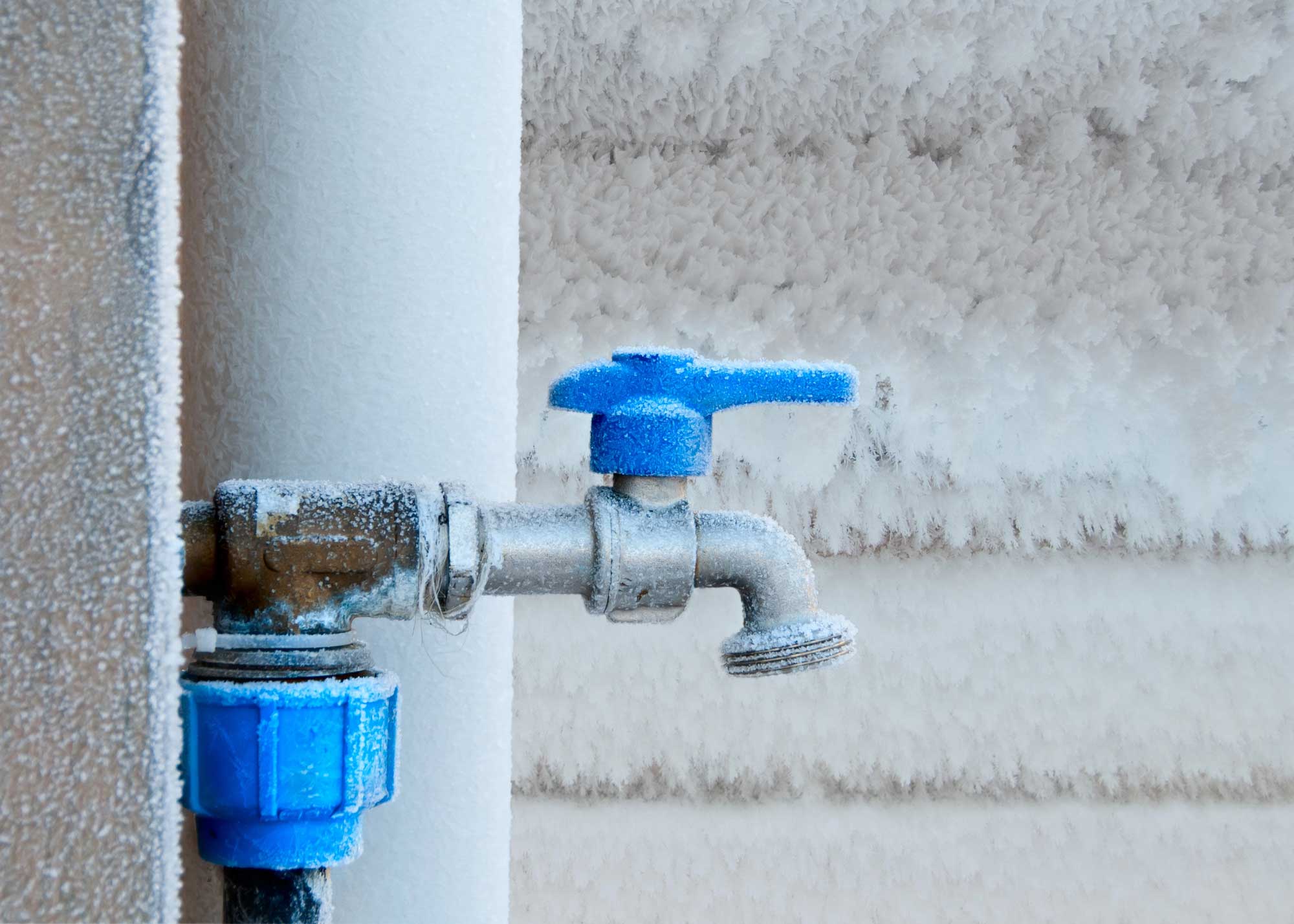
Contrary to popular belief it is not the freezing of the water that causes the pipe to break, but rather the expansion of ice inside the pipe causes water pressure to increase between the ice blockage and a closed faucet. As we see the thermometer drop, the risk of frozen pipes only begins to rise. Having the contact information for local emergency plumbers saved in your phone is a crucial preventative measure before the severe winter weather hits.
However, the pipes that run water to your sink or shower are not at the same risk as a pipe that runs to your hose. That water is usually standing still, and it is just as likely to freeze as water in a calm lake or river. You’ll need to take extra care of the ‘freezing areas’ listed below.
Freezing Areas
- Exposed pipes in basement, garage or crawl space.
- Outdoor plumbing (hoses, pools etc.)
- Exterior Pipes
Since water has to freeze for ice blockages to occur, we recommend:
1) Insulating all exposed piping on the outside walls of your home.
2) Sealing any penetrations that allow cold air to enter your home. Best areas to look at are where lawn faucets exit your home. And where electrical and cable TV service enters your home. Bringing in expert residential plumbers to assess these exterior penetrations ensures that the caulking and insulation are completely airtight.
3) Keeping cabinet doors open to allow warm air to circulate. In kitchens or bathrooms that have sinks and faucets along the outside wall it is important to allow warm house air to get into these closed spaces during cold spells. Oftentimes this can be the difference!
4) Letting the water drip. You will waste some water, so only at risk piping should be left with the water dripping. A slight drip is all you need. If the dripping stops, the pipe may be frozen. Leave the faucet open. An open faucet will provide the needed pressure cel
5) If you have pipes that freeze every year, and you have tried the easy fixes (insulation, etc.) we recommend you have a licensed Plumber reroute the water piping to a better conditioned area. This rerouting is especially important if your older home still relies on a galvanized pipe network, as these rigid metal lines are highly susceptible to splitting under ice pressure.
Proactive Seasonal Maintenance
While these five tips are essential for combating the immediate threat of freezing temperatures, true winter readiness starts earlier. Taking proactive steps in the fall ensures your entire plumbing system, including your water heater and exterior faucets, is prepared for the cold snap. To prevent common cold-weather issues and provide maximum protection before the first hard freeze, review our complete checklist of 8 fall plumbing tips to prepare your home.
Additional Preventative Measures
Don’t turn off the heat: sure, you can lower your thermostat a few degrees here and there to save some money while you’re not home, but DO NOT turn the heat completely off. Scheduling an annual furnace inspection with professional heating technicians guarantees your system won’t unexpectedly fail and leave your plumbing vulnerable to freezing.
We recommend keeping the thermostat set to a minimum temperature of 60°F throughout the entire winter. Investing in a smart thermostat installation allows you to monitor and maintain this critical minimum temperature remotely while you are traveling for the holidays.
Keep garage doors closed: there are water supply lines running through lots of garages and we all know how cold the garage can get. If you have pipes running through the garage, make sure they are insulated and always remember to close the garage door when you enter or exit the house.
Don’t close interior doors: not only will this help maintain a comfortable temperature throughout the entire house, it can help make sure interior pipes are receiving heat, too. It’s especially important to leave cabinet doors open if there are pipes located inside (think underneath the kitchen and bathroom sinks.)
Stay in the loop with updates from the BEST team doing the BEST work—delivered straight to your inbox.