Your sewer line is one of the few parts of your home’s infrastructure that you genuinely cannot afford to ignore. Unlike a dripping faucet or a noisy furnace, a failing sewer line can cause structural damage, create serious health hazards, and produce repair costs that multiply quickly if the problem is not caught early. Sewer line repair is rarely an emergency a homeowner sees coming, but almost every major failure is preceded by warning signs that were visible for weeks or months before the system gave out completely. Understanding how the underground plumbing that connects your home to the municipal system can fail gives you the early detection advantage that prevents the worst outcomes.
In this guide, you will learn:
- The 8 most important warning signs that a sewer line repair may be needed
- Why sewer line failures escalate quickly and why early action matters
- The repair methods available and how to decide which is right for your situation
- What causes sewer lines to fail in the first place
- How to protect your home from the most common causes of sewer line damage
Why Sewer Line Problems Cannot Wait

Unlike most home repair situations where delay is inconvenient but manageable, a failing sewer line creates conditions that worsen at an accelerating rate. A small crack that allows root intrusion becomes a larger crack over the next growing season. A partially collapsed section that restricts flow eventually becomes a complete blockage that backs raw sewage into the home. A pinhole leak in a sewer line running beneath the foundation erodes the soil that supports the structure, creating a foundation problem that is far more expensive than the sewer repair that would have prevented it.
For homeowners in Bloomfield Hills, MI and surrounding areas with older homes and mature tree canopies over established yards, sewer line problems are not hypothetical risks. They are a statistically predictable part of aging infrastructure that rewards vigilance and penalizes neglect.
- Structural Protection: A sewer line leak beneath or near the foundation erodes supporting soil and can cause foundation settling, cracking, and movement that costs tens of thousands of dollars to correct after the fact.
- Health and Sanitation: Sewage backup into a home introduces dangerous pathogens including E. coli and various bacteria and viruses into the living space. Even brief exposure to sewage requires professional remediation of affected materials and surfaces.
- Cost Containment: Catching a sewer line problem at the crack or partial blockage stage typically costs a fraction of what the same problem costs after it progresses to a complete failure with sewage backup and water damage.
- Property Value: A sewer line that has been repaired, documented, and inspected protects property value. An unaddressed sewer line problem discovered during a pre-sale inspection can derail a transaction or reduce a sale price by far more than the repair would have cost.
- Environmental Protection: A leaking sewer line introduces untreated sewage into the soil and potentially the groundwater supply beneath your property, creating an environmental liability that extends well beyond the boundaries of the home.
8 Warning Signs Your Sewer Line May Need Repair
These warning signs range from subtle to urgent, but all of them deserve investigation rather than dismissal. The earlier a sewer line problem is identified and evaluated, the more repair options are available and the lower the total cost of resolution.
1. Sewage Backing Up Into Multiple Fixtures Simultaneously
A single backed-up drain is almost always a localized problem in the branch line serving that fixture. When raw sewage or wastewater backs up into two or more fixtures at the same time, particularly fixtures on the same floor or in fixtures that are physically distant from each other, the blockage is almost certainly in the main sewer line rather than any individual branch.
This is the most urgent sign on this list. Raw sewage backing up into a home is a health hazard that requires immediate action. Do not run water, flush toilets, or operate any drain while a multi-fixture backup is active, as this adds volume to an already overwhelmed system. Call for emergency sewer service the same day.
- Ground-floor fixtures are typically the first to back up during a main sewer line failure because they are closest to the lowest point in the system
- A toilet that gurgles or overflows when the washing machine runs is a clear indicator that the main sewer line cannot handle combined drainage from multiple sources
- Backup that includes solid material or has a strong sewage odor indicates that the blockage is severe and that the backup is drawing from deep in the system
2. Gurgling Sounds From Drains and Toilets
Air displaced by a partial sewer line blockage must escape somewhere, and it typically forces its way back up through the path of least resistance, which is usually the nearest drain trap or toilet. The gurgling sound you hear when water drains from a sink, runs through the dishwasher, or follows a toilet flush is the sound of that displaced air moving through the water seal in a nearby fixture.
This is an early warning sign that often precedes a full backup by weeks or months. A toilet that gurgles after being flushed, a shower drain that produces bubbling sounds while the washing machine runs, or a sink that gurgles when the toilet is used all indicate a restriction or partial blockage in the main sewer line that deserves professional evaluation before it progresses.
3. Sewage Odor Inside or Outside the Home
A properly functioning sewer system is designed to confine sewage gases to the pipe interior through water seals in every fixture trap and the negative pressure maintained by a properly vented drain system. When sewage odors become detectable inside a home, those containment mechanisms have been compromised.
Indoor sewage odor can indicate a dry trap in an infrequently used fixture, a cracked sewer vent pipe, or a sewer line break inside or beneath the foundation that is allowing gases to escape into the building. Outdoor sewage odor, particularly in the yard above the sewer line path, almost always indicates a leak in the underground portion of the line. Both require professional investigation.
- A sewage smell that appears and disappears is often a dry trap in a basement floor drain or a guest bathroom that sees infrequent use. Running water in these fixtures confirms or eliminates this simple cause
- A persistent outdoor sewage odor that is stronger in wet weather, when soil moisture rises and pushes gases toward the surface, strongly suggests an underground pipe leak
- For homeowners in Bloomfield Hills, MI and surrounding areas, the combination of outdoor sewage odor and unusually lush grass directly above the sewer line path is a reliable diagnostic indicator of an active pipe leak
4. Slow Drains Throughout the Home That Do Not Respond to Clearing
Slow drains that are limited to a single fixture or area of the home point to a localized issue that is usually resolvable with drain cleaning. Slow drains that appear throughout the home simultaneously, or that reappear within a few weeks of being cleared, point to a sewer line problem that clearing alone cannot resolve.
A sewer line with a structural defect, a significant root mass, or a partial collapse produces recurring slow drain symptoms because the root cause is not something that can be flushed away. Each time the line is cleared, it relieves the immediate symptom while leaving the underlying structural problem in place to re-accumulate the next blockage.
5. Lush, Sunken, or Wet Patches in the Yard

A leaking sewer line fertilizes and waters the soil directly above it continuously, producing grass that is noticeably greener, taller, and more lush than the surrounding yard in a pattern that follows the sewer line’s path. This is one of the most commonly overlooked early warning signs because many homeowners attribute it to soil variation or irrigation.
A sunken area in the yard above the sewer line path is a more serious symptom that indicates the soil has been eroded or saturated by a sustained leak, creating a void beneath the surface. A wet area in the yard that appears without recent rainfall, particularly one with a sewage odor, is an immediate indicator of an active underground sewer leak that requires urgent professional evaluation.
- The sewer line path from the home to the street typically runs in a relatively straight line from where the line exits the foundation to the street connection
- A series of unusually green patches in a line pattern, even if they do not appear wet, warrants a plumbing camera inspection to evaluate the pipe condition beneath the affected area
- Sinkholes or significant depressions in the yard above a sewer line indicate that a void has formed beneath the surface, which is a structural hazard in addition to a plumbing problem
6. Foundation Cracks or Settlement
A sewer line leak that runs beneath or near a foundation introduces water continuously into the soil that supports the structure. Over time, that water erodes the supporting material and creates voids that cause the foundation to settle unevenly, producing cracks in the walls, floors, and foundation itself.
Foundation problems and sewer line leaks exist in a compounding relationship that makes early identification of the sewer problem critically important. A foundation crack that appears alongside any of the other symptoms on this list should trigger an immediate camera inspection of the sewer line before foundation repair work begins, because addressing the foundation without addressing the sewer leak underneath it allows the settlement to continue after the repair.
7. Rodent or Insect Infestations Originating From Drains
Rats are capable of entering a home through a sewer line break as small as a quarter and navigating through the drain system to emerge through floor drains, toilets, and other plumbing fixtures. A rat infestation that originates from drains rather than from the exterior of the home is a reliable indicator of a sewer line breach somewhere in the underground portion of the system.
Cockroaches, drain flies, and other insects that thrive in sewage environments can also enter through sewer line breaks and establish infestations that cannot be eliminated through pest control alone if the entry point remains open. A pest infestation originating from drains in Bloomfield Hills, MI and surrounding areas should prompt a sewer camera inspection before any pest remediation is undertaken.
8. Unusually High Water Bills Without an Explanation
A sewer line that has broken in a location where it runs adjacent to the water supply line can create a situation where the break allows soil pressure or groundwater to enter the pipe, which in turn can create a siphon effect that draws water out of the supply line. This type of failure is less common than the others on this list but produces an unexplained increase in water consumption that appears on the utility bill without any visible sign of a leak inside the home.
A water bill that has increased by 20 percent or more without any change in usage habits, combined with any other symptoms on this list, warrants professional sewer line evaluation alongside a supply-side leak check.
Sewer Line Repair Methods: What Your Options Actually Look Like
Once a sewer line problem has been identified through a camera inspection, the appropriate repair method depends on the nature, location, and extent of the damage. Here is how the main repair options compare.
Traditional Excavation
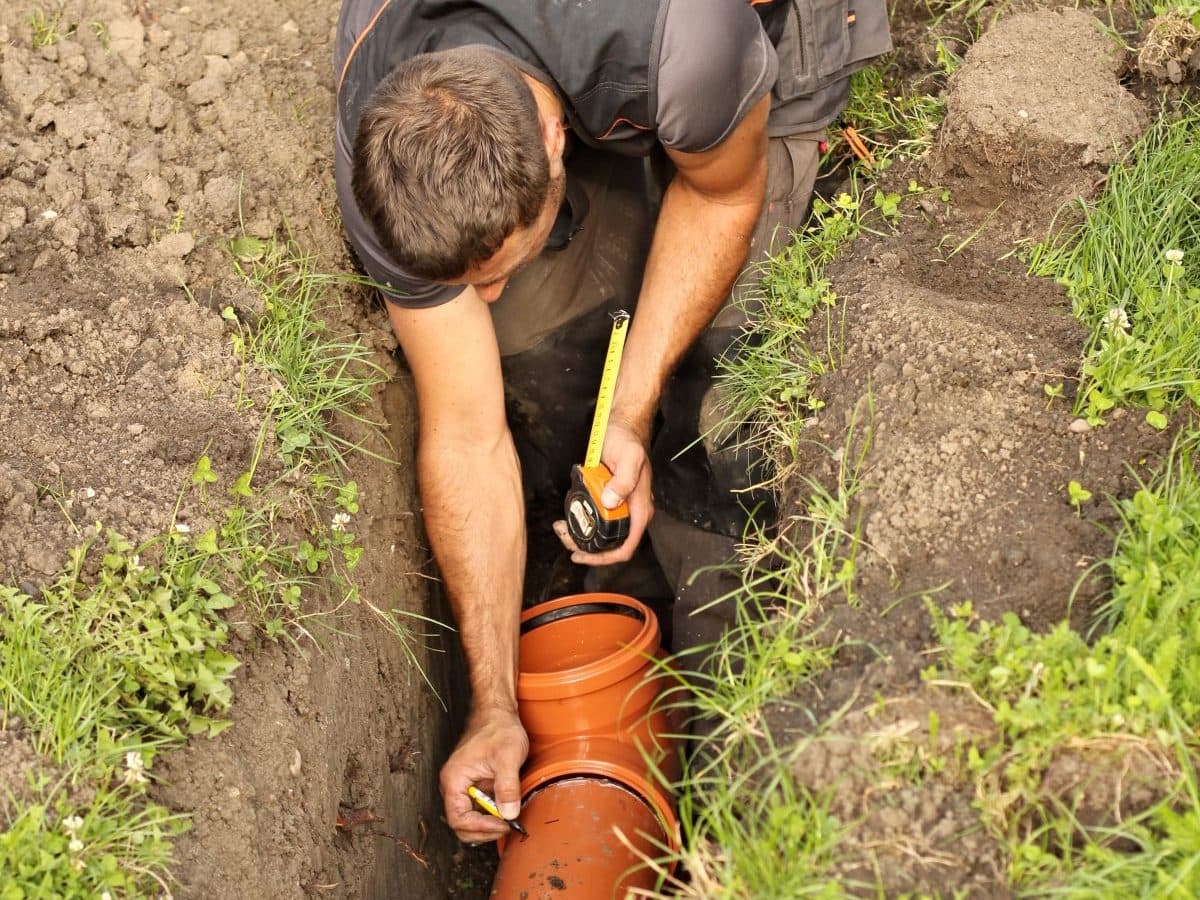
Traditional sewer line repair involves digging a trench along the length of the damaged section of pipe to expose and replace it. This is the most comprehensive repair method and the only appropriate option when the pipe has collapsed, is severely offset, or has deteriorated to the point where it cannot hold a liner. The tradeoffs are cost, disruption to landscaping and paving, and restoration work required after the excavation is backfilled.
Traditional excavation is also the appropriate method when the depth or configuration of the pipe makes trenchless techniques impractical, or when the camera inspection reveals a problem that extends for the full length of the line rather than a discrete damaged section.
Pipe Lining (Cured-in-Place Pipe, CIPP)
Trenchless pipe lining involves pulling a resin-saturated liner through the existing pipe and inflating it against the pipe walls, where it cures to form a new pipe within the old one. This method does not require excavation in most cases, which dramatically reduces surface disruption, cost, and restoration work. The result is a pipe that is structurally sound, has a slightly reduced interior diameter, and can last 50 years or more.
Pipe lining is appropriate for pipes that have cracks, corrosion, or minor root intrusion but still retain their basic shape. It is not appropriate for pipes that are collapsed, severely misaligned, or have significant root mass that cannot be cleared before the liner is installed.
Pipe Bursting
Pipe bursting is a trenchless technique that pulls a bursting head through the existing pipe, fracturing it outward as it goes and simultaneously pulling a new pipe into the space created. This method is appropriate when the existing pipe has deteriorated beyond what lining can address but the pipe’s path can still guide the bursting head through the soil.
Pipe bursting installs a full-diameter new pipe, which eliminates the slight capacity reduction of lining, and it can be performed in most soil conditions without excavation except at the entry and exit points.
What Causes Sewer Lines to Fail

Understanding why sewer lines fail helps homeowners take preventive action and recognize which properties are at higher risk for the problems described above.
Age and Pipe Material
Most sewer lines installed before 1980 used clay tile, cast iron, or Orangeburg pipe, none of which matches the lifespan or root resistance of modern PVC. Clay tile joints are particularly vulnerable to root intrusion, as the gap between sections allows roots to enter and grow inside the pipe over decades. Cast iron corrodes from the inside in acidic soil conditions. Orangeburg, a compressed paper and pitch product used post-WWII, typically begins disintegrating within 50 years of installation.
Tree Root Intrusion
Mature trees with extensive root systems are one of the most common causes of sewer line failure in established neighborhoods. Roots follow moisture and nutrient sources, and a sewer line provides both in abundance. Even hairline cracks in aging pipe materials allow roots to enter, and once inside, they expand with each growing season until they fill the pipe completely.
Ground Movement and Settlement
Soil movement from frost heave, drought-related shrinkage, seismic activity, and changes in the water table all create physical stress on buried sewer lines. A pipe that runs through soil that has settled unevenly develops low spots where solids accumulate and joints that pull apart or offset, both of which lead to blockage and leakage.
Address Sewer Line Problems Before They Compound
The eight warning signs above represent a range from early and subtle to urgent and undeniable, and acting on any of them promptly is almost always less expensive and less disruptive than waiting for the situation to escalate. A camera inspection that costs a few hundred dollars and reveals a developing root intrusion can save tens of thousands of dollars in foundation repair, sewage remediation, and pipe replacement that a more advanced failure would require.
Rolls Mechanical serves homeowners throughout Bloomfield Hills, MI and surrounding areas with camera-guided sewer line inspection, professional diagnosis, and the full range of repair methods from targeted trenchless lining to complete pipe replacement. Contact us today to schedule a sewer line evaluation and find out exactly what your system looks like before a warning sign becomes a crisis.